A tight 3-day southern loop covering Oslob whale sharks and Tumalog Falls, Kawasan Falls canyoneering in Badian, and Moalboal's sardine run and Pescador Island — with transport notes between legs, where to sleep each night, and verified fees.
Quick Answer: Three days is just enough to hit South Cebu's three signature experiences. The logical loop, moving up the coast: Day 1 Oslob (whale sharks at dawn, then Tumalog Falls), Day 2 Kawasan Falls canyoneering in Badian, Day 3 Moalboal's sardine run and Pescador Island before heading back to Cebu City. Sleep near Oslob the first night and in Moalboal the second. Budget around ₱9,000–11,000 per person (~US$155–190) for a mid-range trip — buses, activity fees, two nights' accommodation, and food. Verified June 2026.
3-Day At-a-Glance
| Day | Highlights | Sleep | Budget Est. |
|---|---|---|---|
| Day 1 | Oslob whale sharks, Tumalog Falls, (optional) Sumilon Island | Oslob | ₱2,500 |
| Day 2 | Kawasan Falls canyoneering (Badian) | Moalboal | ₱3,000 |
| Day 3 | Moalboal sardine run, Pescador Island, bus to Cebu City | — | ₱2,500 |
| Total (3 days) | ~₱9,500 |
₱58 ≈ US$1, June 2026. Backpackers using dorms and buses throughout: ~₱6,500. Verified June 2026.
Why This Order?
The route is built around geography and one unavoidable early morning. South Cebu's top attractions sit along the southwest coast, and Oslob is the farthest from the city. By going all the way south first, then working back north through Badian and Moalboal, you never backtrack on the often-congested southern highway. You also front-load the single hardest logistic — the dawn whale shark slot in Oslob — on Day 1, while you're freshest. From there each day moves you a little closer to home, ending in Moalboal, which is the cheapest leg to bus back to Cebu City from.
Day 1: Oslob Whale Sharks + Tumalog Falls
The big morning. Whale shark watching in Barangay Tan-awan opens at 6 AM, and the earlier you register the better — by mid-morning the bay is crowded and hot.
How do you get to Oslob from Cebu City?
From the South Bus Terminal on V. Rama Avenue, take a Ceres bus bound for Bato or Oslob. The fare is ₱155–200 and the ride is 3–4 hours. Tell the conductor you're getting off at Barangay Tan-awan for the whale sharks; the registration area sits right on the main highway. Air-conditioned buses run through the night, so an early-hours departure is possible.
To skip the pre-dawn bus entirely, book a guided Oslob day trip on Klook — packages bundle round-trip transport with the interaction fee and often Tumalog Falls. The trade-off is cost versus the freedom of going independently.
Is Oslob whale shark watching worth it?
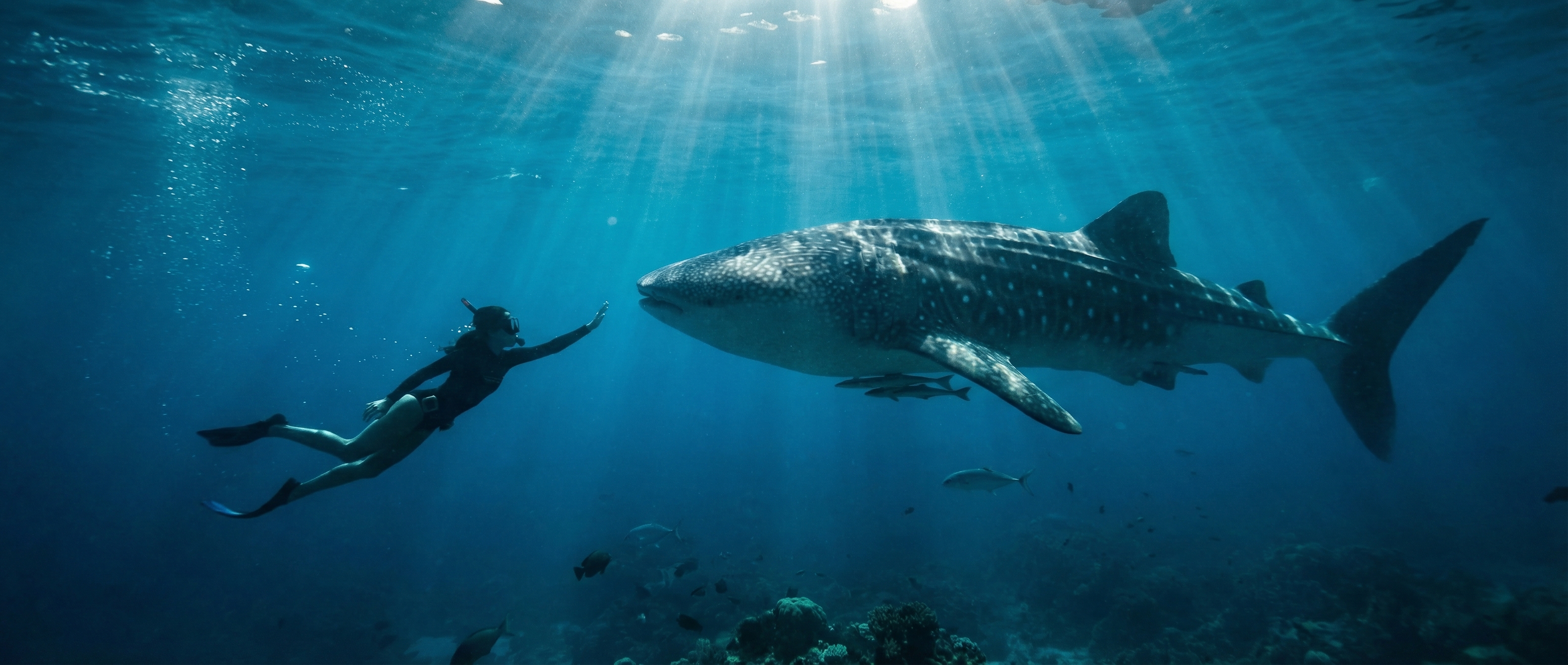
For most travelers, yes — swimming beside a 6-metre whale shark is a genuine bucket-list moment, and Oslob is one of the few places on earth you can reliably do it. The interaction costs ₱500 for watching from the boat, ₱1,000 to snorkel, or ₱1,500 to dive (foreigner rates; locals pay less), including the briefing, life vest, and 30 minutes in the water. Sessions run 6 AM to noon, with registration closing at 11 AM.
Two hard rules: no sunscreen (it's toxic to the sharks — wear a rash guard instead), and keep your distance, with no touching. The activity operates rain or shine. Practically, that means arriving early matters twice over: the queue is shortest before 7 AM, and the morning sea is calmest for snorkeling. More than 200 whale sharks have been recorded off Tan-awan over the years, with a handful considered permanent residents, so sightings are close to guaranteed — but the encounter is best in the cool, quiet first hour.
Afternoon: Tumalog Falls
Once you're done with the sharks (usually by 8–9 AM), make your way to Tumalog Falls, about 10 minutes from Tan-awan. A habal-habal — a motorbike taxi — runs ₱50–100 from the whale shark area. The falls are a curtain-like cascade pouring down a 100-metre moss-covered cliff into a shallow turquoise pool, an almost dreamlike contrast to the busy whale shark scene. Entrance is ₱50, plus ₱20–50 for the short habal-habal from the parking area down to the falls. It's open 7 AM to 4 PM; go before 10 AM for the best light and smallest crowds.
Optional: Sumilon Island
If you have energy and a half-day to spare, Sumilon Island — the Philippines' first marine protected area, famous for its shifting white sandbar — is a 10–15 minute boat ride from the Oslob mainland. Boat hire is ₱1,500–2,500 round trip (split it among 4–6 people) plus a ₱50 environmental fee. It's a genuine highlight, but on a tight three-day plan it's the first thing to cut.
Where to stay tonight
Sleep in or near Oslob so you can reach Tan-awan at the earliest hour without a brutal pre-dawn bus. Search Oslob accommodation on Agoda — guesthouses and small resorts cluster near the town proper and along the coast toward Tan-awan.
For the full ethics-and-logistics breakdown before you decide on the in-water option, read the Oslob whale sharks guide.
Day 2: Kawasan Falls Canyoneering in Badian
Today is the adventure centrepiece. From Oslob, head north up the coast toward Badian — by Ceres bus or private van, roughly 1.5–2 hours. Most travelers base the night in Moalboal and treat Badian (about 30–45 minutes south of Moalboal) as the day's destination.
How much does Kawasan Falls canyoneering cost?
Badian canyoneering runs ₱1,500–2,500 per person, including the guide, equipment, lunch, and transfers from Moalboal. It's a 3–5 hour guided adventure down the Matutinao River canyon: cliff jumps from 3 to 12 metres (all optional — guides won't pressure you), natural water slides, and swimming through turquoise pools, ending at the milky-blue tiers of Kawasan Falls itself. That final waterfall is the emotional peak of the whole trip.
Tours start between 6 and 8 AM. Walk-in works on weekdays; on weekends, book the Kawasan canyoneering tour on Klook to lock in a guide slot.
If you'd rather just see the falls without the canyon, you can visit Kawasan Falls directly — ₱200 entrance plus ₱50 parking, open 6 AM to 4 PM, with a scenic 15–20 minute walk from the entrance.
What should I bring for canyoneering?
Quick-dry shorts and a rash guard (nothing loose), water shoes or old trainers with grip — never flip-flops — a waterproof phone pouch, and ₱200–400 cash for the guide tip. Leave valuables at your hotel. Skip the heavy breakfast; you'll be jumping and swimming for hours.
The honest take on canyoneering and rain
This is the one leg the weather can cancel. The Matutinao River rises fast after heavy rain, and operators rightly shut down when it does — usually a risk from June through November. If you're traveling in the wet months, call ahead and keep Day 3's Moalboal activities flexible so you can swap days if needed. It's also the most physical day of the three: a moderate fitness level and comfort in water are required, though no climbing or swimming skill is.
For the full route description and safety detail, read the Kawasan Falls canyoneering guide.
Where to stay tonight
Moalboal is the smart base: close enough to Badian for canyoneering and exactly where Day 3 happens, so you don't move again. Search Moalboal hotels on Agoda — the Panagsama Beach strip runs from backpacker dorms to beachfront resorts. Book ahead on weekends, when it fills up. Our where to stay in Moalboal guide breaks down the neighborhoods.
Day 3: Moalboal — Sardine Run + Pescador Island
Your last day, and the most relaxed. Everything centres on Panagsama Beach in Barangay Basdiot — if you slept in Moalboal you're already there.
What is the Moalboal sardine run?
The Moalboal sardine run is millions of sardines schooling in tornado-like formations just 20–30 metres off Panagsama Beach. Unlike sardine runs elsewhere that come and go seasonally, Moalboal's school has stayed put year-round since 1998 — so it's reliable any day you visit. You don't need a boat: wade in from shore and swim out. Mask-and-fins rental runs about ₱100–150 for the day from the dive shops along the beach.
There's a ₱100 environmental fee, and as of recent seasons a guide may be required (₱300–500) — check locally. Go at sunrise, around 6 AM, for the densest bait balls; the school disperses through the midday hours. The same swim often turns up green sea turtles grazing on the seagrass nearby.
Is Pescador Island worth it?
Yes, especially if you snorkel or dive. Pescador Island is a tiny limestone island in the Tañon Strait, a protected marine sanctuary since 1990 and one of the best dive sites in the Philippines. Its famous feature, "The Cathedral," is an underwater cavern where light streams through openings amid schooling fish. A ₱100 marine park fee applies (usually folded into the boat or dive price), and the island is a 15–20 minute banca — a small outrigger boat — from Panagsama. Every dive shop on the beach runs trips out.
Certified divers can rent full kit and dive Pescador's walls; snorkelers circle the island by boat since you can't land on it.
The honest take on Moalboal
Panagsama is a rocky shoreline, not a postcard white-sand beach — its value is entirely underwater. If you came for sand, White Beach (Basdaku) is 15 minutes north. The sardine run is genuinely world-class and free to reach from shore, which makes it the best-value experience in South Cebu. The one caveat: it's popular, so morning crowds in the water are real. Beat them by being in the water by 6:30 AM.
Heading back to Cebu City
When you're done, collect your bags and catch a Ceres bus from Moalboal back to the South Bus Terminal — roughly 3–4 hours, and one of the cheaper legs of the whole trip. If your flight is in the evening, the stop in Carcar City (famous for lechon roast pork and chicharon, about halfway) is an easy and worthwhile break. Aim to leave Moalboal by early afternoon if you have a flight that night, since weekend traffic south of Carcar can stretch the ride well past four hours.
For island-hopping logistics and the best dive operators, see our Moalboal sardine run and island hopping guide.
Budget Estimate (per person, mid-range)
| Item | Estimated Cost |
|---|---|
| Accommodation (2 nights, avg ₱1,500/night) | ₱3,000 |
| Whale shark snorkeling interaction | ₱1,000 |
| Tumalog Falls (entrance + habal-habal) | ₱150 |
| Kawasan canyoneering | ₱2,000 |
| Moalboal snorkel rental + sardine fee | ₱250 |
| Pescador Island boat + marine fee | ₱500 |
| Bus fares (all legs combined) | ₱600 |
| Food (avg ₱400/day) | ₱1,200 |
| Incidentals and tips | ₱800 |
| Total (3 days) | ~₱9,500 (~US$165) |
Backpackers: around ₱6,500 using dorms and buses throughout. Private van transfers, certified diving, and a Sumilon Island add-on push the total higher. ₱58 ≈ US$1, June 2026. Verified June 2026.
Practical Notes
South Bus Terminal on V. Rama Avenue, Cebu City, is the hub for every southern route in this itinerary. Travel times above assume normal weekday traffic; weekends and Philippine public holidays can add 30–60 minutes south of Carcar.
Whale sharks: arrive at Tan-awan before 6 AM. By 9 AM the zone is crowded and the experience degrades. No sunscreen, ever.
Canyoneering and rain: the Matutinao River swells fast after heavy rain and operators cancel. Always call ahead June through November, and keep your Moalboal day flexible so you can swap if a tour gets scrubbed.
Reservations: book Moalboal accommodation and weekend Kawasan canyoneering in advance. Oslob whale sharks are walk-in but queue-dependent on arrival time.
Two quotable numbers to plan around: Oslob whale shark snorkeling is ₱1,000 per person and Kawasan canyoneering is ₱1,500–2,500 per person — together the two biggest line items of the trip, both verified June 2026.
Ready to Book This Trip?
Three days, three unforgettable South Cebu experiences. Lock in the headline activities and a Moalboal base, then let the buses handle the rest.
- Browse whale shark and canyoneering details, plus the Moalboal sardine run and Pescador Island.
- Book tours on Klook — Oslob day trips and Kawasan canyoneering.
- Find your Moalboal hotel on Agoda — book Panagsama Beach early on weekends.
Want to stretch this into a fuller trip? Add Cebu City and Osmeña Peak with our 5-day Cebu itinerary.
Book Tours & Hotels for This Trip
Find and book the best deals — prices and availability update in real time. Links open in a new tab.
Frequently Asked Questions
What is the best order for a 3-day South Cebu itinerary?
Go geographically: Day 1 Oslob (whale sharks at dawn, then Tumalog Falls), Day 2 Kawasan Falls canyoneering in Badian, Day 3 Moalboal (sardine run and Pescador Island), then return north to Cebu City. This moves you up the coast from the far south without backtracking on the congested southern highway. Verified June 2026.
Is 3 days enough for Oslob, Kawasan, and Moalboal?
Yes. Three full days covers the three headline South Cebu experiences at a brisk but doable pace — one early morning for whale sharks plus Tumalog Falls, one full day of canyoneering, and one day of snorkeling at Moalboal. You won't have spare lounging time, but you won't miss the highlights either.
How much does a 3-day South Cebu trip cost?
Budget roughly ₱9,000–11,000 per person (~US$155–190) for a mid-range trip — two nights of accommodation, the whale shark interaction, Kawasan canyoneering, Moalboal snorkeling and Pescador Island, buses, and food. Backpackers using dorms and buses can do it for around ₱6,500. Verified June 2026.
How early do I need to wake up for Oslob whale sharks?
Plan to be at the Tan-awan registration area before 6 AM, when whale shark watching opens. If you sleep in Oslob or nearby the night before, a 5–5:30 AM start is enough. Coming straight from Cebu City means a roughly 3 AM bus to cover the 3–4 hour ride. Sleeping in the south the first night is the way to avoid that.
Can I do this South Cebu itinerary by public bus?
Yes. Every leg runs on Ceres buses from Cebu City's South Bus Terminal — Oslob (₱155–200), then north toward Badian and Moalboal. Habal-habal motorbike taxis and tricycles cover the short hops to falls and beaches. Independent bus travel is far cheaper than a private van, just slower.
Where should I stay each night on this itinerary?
Night 1 in or near Oslob so you're close to Tan-awan for the dawn whale sharks. Night 2 in Moalboal, which is the natural base for both Kawasan canyoneering (about 30–45 minutes south) and Day 3's Moalboal activities. Panagsama Beach in Moalboal has the widest range of dorms and resorts.
Is Oslob whale shark watching ethical?
It's the most debated activity in Cebu. The whale sharks are hand-fed daily to keep them in the bay, which conservationists argue alters natural behavior. If that troubles you, skip the in-water interaction. Many travelers do the watching-only option or replace it entirely with a dive at Pescador. We lay out the trade-offs honestly in our Oslob guide.
When is the best time to do this itinerary?
The dry season, roughly December to May, gives the most reliable conditions — especially for canyoneering, which operators cancel after heavy rain swells the Matutinao River. Oslob whale sharks run year-round and Moalboal's sardine run is permanent, so the off-season risk is mainly the Kawasan leg.
More Places to Explore
 Wildlife
Whale Shark Watching
Oslob
Swim alongside gentle whale sharks, the world's largest fish, in one of the few places where these magnificent creatures can be reliably encountered.
WaterfallsKawasan Falls
Badian
A stunning three-tiered waterfall famous for its turquoise waters, bamboo raft rides, and as the endpoint of the famous Badian canyoneering adventure.
Diving & SnorkelingMoalboal Sardine Run
Moalboal
Swim with millions of sardines in one of the world's only year-round sardine runs, just meters from shore.
IslandsPescador Island
Moalboal
A world-class marine sanctuary featuring The Cathedral underwater cave and exceptional wall diving.
WaterfallsTumalog Falls
Oslob
A spectacular curtain waterfall cascading down a moss-covered cliff into a shallow turquoise pool, creating a dreamlike natural retreat.