How European travellers reach Cebu in 2026 — connecting flights via the Middle East or Asia, the 30-day visa-free entry, the best time to swap the European winter for tropical sun, a diving-friendly itinerary, and a realistic budget in euros.
Quick Answer: There are no direct flights from Europe to Cebu — you connect once, via a Middle East hub (Emirates, Qatar, Etihad, Turkish) or an Asian hub (Singapore, Hong Kong, Bangkok), for a total of roughly 15–19 hours. EU and EEA citizens get 30 days visa-free entry under Executive Order 408, plus a free eTravel registration within 72 hours of arrival. The best time to go is the European winter (November–March), which lines up with the Philippine dry season. Cebu runs on 230V like Europe and English is widely spoken, so it is an easy long-haul tropical escape. Budget around €1,200–1,800 (₱75,000–113,000) per person for two weeks excluding flights. Verified June 2026 — confirm visa and flight details with your airline or the Philippine embassy.
Germans and the French are Cebu's two biggest European markets — together a little under 5% of foreign arrivals — followed by other EU, UK and Scandinavian travellers. The appeal is obvious: Western Europeans love a long-haul Southeast Asian holiday of beaches, diving and warm water, and Cebu delivers all three from a single island province. This guide is written for you, the European traveller planning the trip from home, with the flights, the visa rule, the timing, the money and an honest take on the downsides.
Quick Facts for European Travellers
| Detail | What to know |
|---|---|
| Flights / connection | No direct flights; one stop via Middle East (Emirates, Qatar, Etihad, Turkish) or Asia (Singapore, Hong Kong, Bangkok); some via Manila + domestic hop |
| Travel time | ~15–19 hours total including connection |
| Visa | 30 days visa-free for EU/EEA citizens (EO 408) + free eTravel registration within 72h |
| Currency | Philippine peso (₱). €1 ≈ ₱63 (June 2026) |
| Best time | European winter, November–March (= Philippine dry season) |
| Plugs & power | 230V / 60Hz — same voltage as Europe; bring a plug adapter for Type A/B sockets |
Verified June 2026. Fares change constantly — check Skyscanner or Google Flights for live prices, and confirm visa rules with the Philippine embassy in your country.
How Do You Get From Europe to Cebu?
There are no direct flights from Europe to Cebu — every routing involves at least one connection. You have two broad options.
Connect via a Middle East hub. This is the most common choice from Germany, France and the rest of Western Europe. Emirates (via Dubai), Qatar Airways (via Doha), Etihad (via Abu Dhabi) and Turkish Airlines (via Istanbul) all offer one-stop itineraries from major European cities to either Cebu (Mactan-Cebu International, code CEB) or Manila. From Frankfurt, Munich, Paris or Amsterdam you fly roughly 6–7 hours to the Gulf, then around 9–10 hours onward, for a total in the 15–19 hour range with connection time.
Connect via an Asian hub. Singapore, Hong Kong and Bangkok also feed flights into Cebu, which can suit travellers already routing through Asia or chaining Cebu with another stop.
Route via Manila, then a short domestic hop. Some itineraries land you in Manila (MNL) first, from where Cebu is a roughly 1.5-hour domestic flight on Philippine Airlines, Cebu Pacific or AirAsia. This sometimes opens up cheaper or more convenient long-haul legs, at the cost of an extra connection.
Do not take any single fare quoted online as gospel — prices swing wildly by season and booking window. Compare live on Skyscanner or Google Flights, set a price alert, and book the European winter legs early because that is peak season for sun-seekers. Verified June 2026.
Mactan-Cebu International Airport (CEB) is the Philippines' second-busiest airport and sits on Mactan Island, about 11 km and 30–45 minutes from central Cebu City, so you can be on the beach the same day you land.
Do Europeans Need a Visa for Cebu?
No — EU and EEA citizens get 30 days of visa-free entry to the Philippines, which covers Cebu. Under Executive Order 408, nationals of Germany, France, Spain, Italy, the Netherlands, Belgium, Austria, the Nordic countries and the rest of the EU/EEA can enter visa-free for up to 30 days for tourism.
Two conditions matter:
- Your passport must be valid for at least six months beyond your arrival date.
- You must hold an onward or return ticket out of the Philippines.
On top of the visa exemption, every arriving traveller must complete the free eTravel registration at etravel.gov.ph within 72 hours before arrival. It takes a few minutes, generates a QR code you show on arrival, and costs nothing — beware of third-party sites that charge a "service fee" for it.
If you want to stay longer than 30 days, you can extend at a Bureau of Immigration office in Cebu for a fee, so a four- or six-week trip is entirely doable. Verified June 2026 — visa rules can change, so confirm the current position with the Philippine embassy or consulate in your country before booking.
When Is the Best Time to Visit Cebu From Europe?
The best time is the European winter — roughly November to March — because it overlaps with the Philippine dry season. While Germany and France are cold and grey, Cebu offers warm, mostly sunny days, calm seas for island hopping, and reliable conditions for canyoneering at Kawasan Falls. For a long-haul traveller who has flown 16 hours for sun, that reliability is worth a lot.
This window is also the most comfortable for diving and snorkelling, with good visibility and gentler conditions. The trade-off is that it is peak season, so flights and the better resorts cost more and fill earlier — book ahead.
April and May are hot and still mostly dry, which suits beach time but can be sweaty for hiking. The wet season runs roughly June to November, bringing afternoon downpours and the small but real risk of a typhoon; canyoneering operators cancel after heavy rain when rivers rise. You can still travel then for lower prices and thinner crowds, but go in with eyes open. For a fuller breakdown, see our best time to visit Cebu guide.
What Should You Do in Cebu?
Cebu packs an unusual amount into one province: heritage city, big-ticket marine encounters, jungle waterfalls and proper diving. The headline experiences for a first European visit:
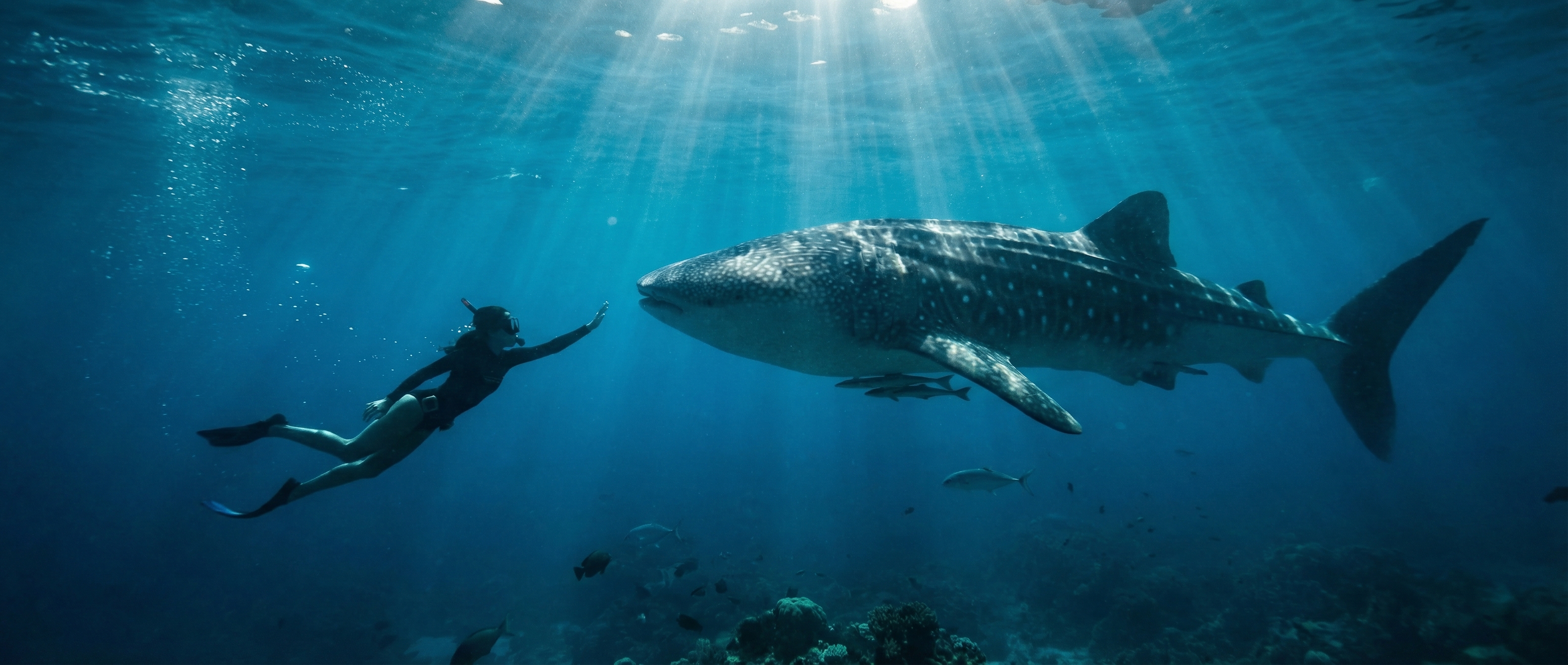
- Oslob whale sharks — snorkel beside the world's largest fish in south Cebu. Read our honest Oslob whale sharks guide for the ethics and the rules before you decide.
- Kawasan Falls canyoneering — a 3–4 hour adventure of cliff jumps, swimming and rappelling that ends at the turquoise Kawasan Falls. One of the most fun half-days in the country.
- The Moalboal sardine run — millions of sardines schooling just metres from shore, swimmable straight off the beach. See our Moalboal sardine run and island hopping guide.
- Pescador Island — a tiny protected island whose "Cathedral" dive site is among the best snorkel and dive spots in the Philippines.
- Thresher shark diving in Malapascua — for certified divers, Malapascua in the far north is one of the only places on earth to see thresher sharks reliably at dawn. Details in our Malapascua thresher shark diving guide.
For the full menu, browse things to do in Cebu.
A Sample Itinerary for European Travellers
Because the flight from Europe is so long, it is not worth crossing the planet for a short trip. Most European visitors stay 10–14 days and combine the land highlights with diving or snorkelling. Here is a relaxed two-week shape that earns the long-haul flight:
- Days 1–2 — Cebu City & recover. Land, sleep off the jet lag, and ease in with the colonial core: Magellan's Cross, the Basilica del Santo Niño and Temple of Leah.
- Days 3–5 — South Cebu. Head to Oslob for whale sharks, then Badian for Kawasan canyoneering. Base yourself in Moalboal.
- Days 6–8 — Moalboal diving. The sardine run, Pescador Island and easy boat dives. Get certified or do a discover-scuba day if you are new to diving.
- Days 9–11 — Malapascua (divers) or Bantayan (beach). North Cebu for thresher sharks if you dive, or the white sand and slow pace of Bantayan if you would rather not.
- Days 12–14 — Slow down & fly home. A final beach stretch on Mactan near the airport, last-minute shopping, then the long flight back.
This pace respects the jet lag at both ends and treats diving as a core part of the trip rather than an afterthought — sensible given how far you have come. If you want a tighter plan, see our Cebu 7-day itinerary.
Where Should You Stay?
Cebu's accommodation runs from backpacker dorms to luxury island resorts, and for European travellers the value is excellent against the euro. A rough split:
- Cebu City / Mactan for the first and last nights near the airport — business hotels and beach resorts on Mactan.
- Moalboal (Panagsama Beach) as your dive and south-coast base — backpacker rooms to mid-range resorts.
- Malapascua or Bantayan for the northern leg — laid-back island stays.
Search Cebu hotels and resorts on Agoda to compare across all of these, and book the European-winter dates early because that is peak season.
How Much Does a Cebu Trip Cost in Euros?
Excluding international flights, Cebu is gentle on a European budget. Rough per-person, mid-range guide for two weeks (€1 ≈ ₱63, June 2026):
| Item | Estimate (€) | Estimate (₱) |
|---|---|---|
| Accommodation (13 nights, mid-range) | €450–700 | ₱28,000–44,000 |
| Activities (whale sharks, canyoneering, diving) | €250–400 | ₱16,000–25,000 |
| Domestic transport (buses, boats, transfers) | €100–160 | ₱6,000–10,000 |
| Food & drink | €250–350 | ₱16,000–22,000 |
| Incidentals & fees | €100–150 | ₱6,000–9,000 |
| Total (excl. international flights) | ~€1,150–1,760 | ~₱72,000–110,000 |
Verified June 2026. International flights from Europe are extra and vary hugely — check Skyscanner. Backpackers using dorms and buses can undercut these figures substantially; luxury island resorts and a full diving course push them higher.
A few money notes for Europeans: the currency is the Philippine peso, not the euro, so withdraw pesos from an ATM on arrival. Cards work in malls and resorts but you need cash for buses, tricycles and small eateries. And because the peso buys a lot, day-to-day spending — a good local meal, a tricycle ride, a snorkel rental — will feel cheap compared with home.
The Honest Take
Two things European travellers should weigh honestly before booking.
The long haul is real. There is no non-stop flight, and 15–19 hours of travel with a connection, plus 6–7 hours of time difference (Cebu is GMT+8), takes a toll. This is why a one-week trip rarely feels worth it from Europe — you lose two days to flying and jet lag at each end. Budget at least 10 days, ideally two weeks, so the journey pays off.
Mind the monsoon. If you can only travel in the European summer (June–August), you are arriving in the Philippine wet season. Expect humid afternoons with heavy rain, occasional flight or ferry disruption, and the genuine — if low — possibility of a typhoon. Canyoneering gets cancelled after big rain. None of this ruins a trip, and prices are lower, but if you are chasing guaranteed sun, the European winter is the smarter window.
The upsides, though, are stacked in your favour: same 230V power as home so just a plug adapter, English everywhere which makes Cebu easier than much of Southeast Asia, no visa paperwork beyond the free eTravel form, and a favourable exchange rate. For a European wanting reliable tropical sun and world-class diving in one trip, Cebu is hard to beat.
Plan Your Cebu Trip
Ready to build the trip? Start with the big-ticket experiences: the Oslob whale sharks, the jungle pools of Kawasan Falls, the Moalboal sardine run, and the dive sites around Pescador Island. When your dates are set, browse tours and activities in Cebu on Klook and book your hotels and resorts on Agoda — booking the European-winter peak early gets you the best rooms at the best prices.
Book Tours & Hotels for This Trip
Find and book the best deals — prices and availability update in real time. Links open in a new tab.
Frequently Asked Questions
Do Europeans need a visa to visit Cebu?
No. Citizens of EU and EEA countries (Germany, France, Spain, Italy, the Netherlands and so on) receive 30 days of visa-free entry to the Philippines under Executive Order 408, provided your passport is valid for at least six months and you hold an onward or return ticket. You must also complete the free eTravel registration at etravel.gov.ph within 72 hours before arrival. Verified June 2026 — confirm with your airline or the Philippine embassy before you travel.
How do you get from Europe to Cebu?
There are no direct flights from Europe to Cebu. You connect once, either through a Middle East hub (Emirates via Dubai, Qatar Airways via Doha, Etihad via Abu Dhabi, or Turkish Airlines via Istanbul) or an Asian hub (Singapore, Hong Kong or Bangkok). Some itineraries route via Manila with a short domestic hop to Cebu. Total travel time is roughly 15–19 hours including the connection. Compare fares on Skyscanner or Google Flights. Verified June 2026.
When is the best time to visit Cebu from Europe?
The European winter, roughly November to March, is ideal. It lines up with the Philippine dry season, so you swap cold, grey months at home for reliable tropical sun. It is also the most reliable window for canyoneering and island hopping. Verified June 2026.
How long is the flight from Germany to Cebu?
Around 15–19 hours in total from Frankfurt, Munich or Berlin, including one connection. A typical routing is Frankfurt to Dubai or Doha (about 6–7 hours), then onward to Cebu or Manila (roughly 9–10 hours), plus connection time. There is no non-stop option. Verified June 2026.
Do I need a power adapter in Cebu?
Good news for Europeans: Cebu runs on 230V at 60Hz, the same voltage as Europe, so your chargers and most appliances work without a transformer. You will usually just need a plug adapter, as Cebu commonly uses flat North American-style Type A/B sockets alongside European-style ones in newer hotels.
Is English widely spoken in Cebu?
Yes. English is an official language of the Philippines and is widely spoken in Cebu — on signs, menus, in hotels, with drivers and tour operators. For most European visitors this makes Cebu noticeably easier to navigate than much of mainland Southeast Asia.
What currency is used in Cebu and can I pay in euros?
The currency is the Philippine peso (₱), not the euro. Cards work in malls, resorts and larger restaurants, but you will want cash for buses, tricycles, market stalls and small carinderias. Withdraw pesos from ATMs on arrival rather than carrying large amounts of euros. As a rough guide, €1 ≈ ₱63 in June 2026.
Is one trip enough to see Cebu, or should I combine it with diving?
Given the long flight from Europe, most travellers stay 10–14 days and combine sightseeing with diving or snorkelling. Cebu is a world-class dive base — the Moalboal sardine run, Pescador Island and the thresher sharks of Malapascua are all within reach, so it makes sense to build the trip around the water as well as the land.
More Places to Explore
 Wildlife
Whale Shark Watching
Oslob
Swim alongside gentle whale sharks, the world's largest fish, in one of the few places where these magnificent creatures can be reliably encountered.
WaterfallsKawasan Falls
Badian
A stunning three-tiered waterfall famous for its turquoise waters, bamboo raft rides, and as the endpoint of the famous Badian canyoneering adventure.
Diving & SnorkelingMoalboal Sardine Run
Moalboal
Swim with millions of sardines in one of the world's only year-round sardine runs, just meters from shore.
IslandsPescador Island
Moalboal
A world-class marine sanctuary featuring The Cathedral underwater cave and exceptional wall diving.