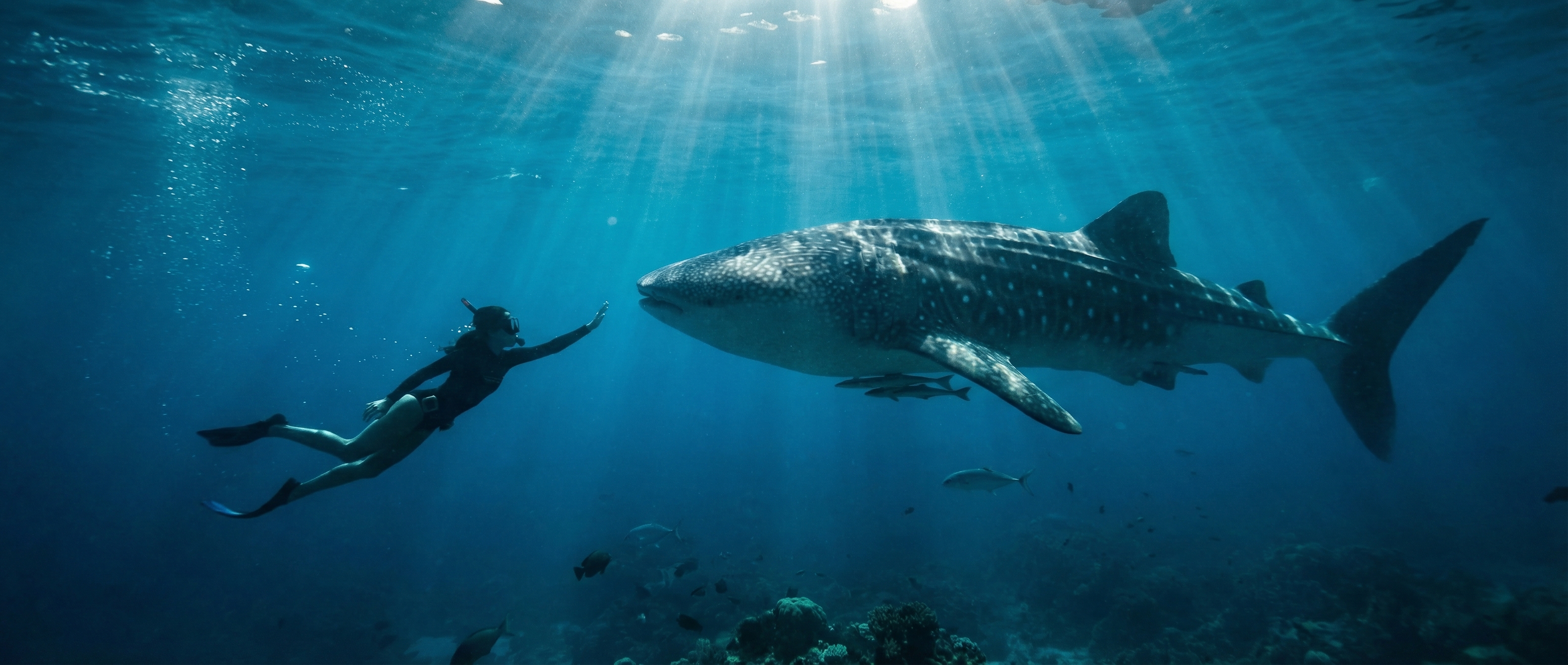
A full week in Cebu, done right: Cebu City heritage, Oslob whale sharks, Kawasan canyoneering, Moalboal diving, Osmeña Peak, then a fork north to Malapascua thresher diving or Bantayan's white-sand beaches — with transport, nightly bases, and a realistic budget.
Quick Answer: Seven days is enough to combine Cebu's southern classics with one northern island. The logical order: Day 1 Cebu City heritage, Day 2 Oslob (whale sharks + Tumalog Falls), Day 3 Kawasan Falls canyoneering in Badian, Day 4 Moalboal (sardine run + Pescador Island), Day 5 Osmeña Peak sunrise then transfer back through Cebu City and up north, Days 6–7 your choice of Malapascua (thresher shark diving) or Bantayan Island (white-sand beaches). Budget roughly ₱20,000–24,000 per person (~US$345–415) mid-range — buses, ferries, activity fees, accommodation, and food. Verified June 2026.
7-Day At-a-Glance
| Day | Highlights | Base | Budget Est. |
|---|---|---|---|
| Day 1 | Magellan's Cross, Temple of Leah, Tops Lookout | Cebu City | ₱2,000 |
| Day 2 | Oslob whale sharks, Tumalog Falls | Oslob or Moalboal | ₱2,500 |
| Day 3 | Kawasan Falls canyoneering (Badian) | Moalboal | ₱2,800 |
| Day 4 | Moalboal sardine run, Pescador Island | Moalboal | ₱2,500 |
| Day 5 | Osmeña Peak sunrise, transfer south → north | In transit / North | ₱2,000 |
| Day 6 | Fork: Malapascua thresher dive OR Bantayan beaches + Virgin Island | Malapascua / Bantayan | ₱3,500 |
| Day 7 | Slow morning, ferry/bangka back, bus to Cebu City | — | ₱2,000 |
| Total (7 days) | ~₱20,000–24,000 |
₱58 ≈ US$1, June 2026. Budget travelers using dorms and public transport throughout: ~₱13,000. The Day 6 figure is higher for Malapascua (a certified dive runs ₱2,500–4,000) than for Bantayan (island hopping splits across a boat). Verified June 2026.
Why This Order?
The week is built around geography and stamina, not just a wish-list. Cebu's marquee attractions split into two clusters: the southwest coast (Oslob, Badian, Moalboal, Dalaguete) and the northern tip (Maya/Malapascua and Hagnaya/Bantayan). There's no quick coastal road linking them — both northern legs route back through Cebu City. So the smart move is to knock out the entire south first, in a clean line down and back up the highway, then pivot north for a relaxed finish.
Front-loading the south also puts the brutal early starts (Oslob's 6 AM whale-shark window, Day 2) and the most physical day (Kawasan canyoneering, Day 3) early, while you're fresh. By the time you reach the north on Days 6–7, you've earned a slow island and you take it.
Day 1: Cebu City Heritage
Arrive, drop your bags, and spend the day in the colonial core and the hills above it. Distances are short — a Grab ride-hailing car or a rented motorbike covers them cheaply.
Morning/Afternoon
Start at Magellan's Cross on Osmeña Boulevard — the 16th-century monument marking where Ferdinand Magellan planted a cross in 1521. Free entry, 15 minutes, and the adjacent Basilica Minore del Santo Niño is one of the oldest churches in the Philippines. Walk five minutes to Fort San Pedro, a Spanish colonial fortification built in 1565 (entrance around ₱30).
In the afternoon, head up to Temple of Leah in Barangay Busay — a Roman-style tribute temple with sweeping city views. A Grab from the city center runs about ₱150–200.
Evening
Drive up to Tops Lookout at dusk for panoramic views over the city and the Mactan Strait. The on-site café makes it easy to linger. Dinner afterward in IT Park or the Escario corridor — carinderia (local eatery), Korean BBQ, or anything in between.
Where to stay: IT Park or the Ayala area puts you central. Search Cebu City hotels on Agoda — budget guesthouses from ₱800/night, decent mid-range hotels around ₱2,500–4,000/night.
Day 2: Oslob Whale Sharks + Tumalog Falls
Wake-up: 3:30 AM. This is the one truly brutal morning. It is worth it.
How do you get to Oslob from Cebu City?
From the South Bus Terminal on V. Rama Avenue, take a Ceres bus — the green provincial coach everyone calls "Ceres" — bound for Oslob or Santander. Air-conditioned buses run through the night. Fare is around ₱200; the ride is roughly 3.5–4 hours. Tell the conductor "Tan-awan, whale shark."
Alternatively, book a guided Oslob day trip on Klook — packages bundle transport and the interaction fee and remove the pre-dawn bus problem entirely.
Arrive at Barangay Tan-awan before 6 AM to register. Slots fill fast and the experience degrades as crowds build. Sessions last about 30 minutes. No sunscreen — it's toxic to the sharks — so wear a rash guard. For the ethics, rules, and what to expect, read the Oslob whale sharks guide.
Afternoon
After the whale sharks (done by 8–9 AM), take a short tricycle ride to Tumalog Falls — about 10–15 minutes from Tan-awan. The falls drop into turquoise pools framed by bamboo groves. Arrive before 10 AM for thinner crowds.
Where to stay: Sleeping near Oslob lets you hit Tan-awan at the earliest hour. Search Oslob accommodation on Agoda. Or push about an hour north to Moalboal and base yourself there for Days 2–4 to save repeat packing.
Day 3: Kawasan Falls Canyoneering in Badian
From Oslob or your Moalboal base, head to Badian — about an hour from Moalboal, or directly northwest of Oslob by bus or van.
How much does Kawasan canyoneering cost?
Canyoneering departs from Barangay Matutinao and runs about ₱1,500–2,500 per person including guide, life vest, and gear (verified June 2026). It's a 3–4-hour guided adventure through the Matutinao River canyon: wading, swimming, cliff jumping from 5–25 meters (all optional — guides won't pressure you), and rappelling into pools. The route ends at Kawasan Falls itself, a multi-tiered turquoise waterfall and the emotional peak of the whole week.
Walk-in works on weekdays. On weekends, book the Kawasan canyoneering tour on Klook to lock a guide slot — prices are comparable to walk-in.
What to bring: quick-dry shorts and a rash guard (no loose clothing), water shoes or old trainers with grip (no flip-flops), a waterproof phone pouch, a light snack, and a small tip for the guide.
Evening: most travelers continue 45 minutes north to Moalboal for the night. For safety detail and the full route, read the Kawasan Falls canyoneering guide.
Day 4: Moalboal — Sardine Run + Pescador Island
Moalboal's strip is Panagsama Beach in Barangay Saavedra. If you slept here the night before, you're already on the spot.
Sardine Run
The Moalboal sardine run is one of the most photographed underwater spectacles in Asia — millions of sardines schooling in a permanent bait ball just 15–20 meters from shore. You don't need a boat: wade in and swim out. Mask and fins rent for a low daily rate from the dive shops on Panagsama. The ball shifts through the day; a dive-shop guide will point you straight to it.
Pescador Island
A 20-minute bangka (outrigger boat) from Panagsama reaches Pescador Island, a small protected marine sanctuary. Its "Cathedral" — a chimney cave open at both ends, shafts of light cutting through schooling fish — is one of the best snorkel and dive sites in the Philippines. Certified divers can rent kit and join guided dives; intro dives (no certification) are available too.
For the full island-hopping breakdown, see the Moalboal sardine run & island hopping guide.
Where to stay: Search Moalboal hotels on Agoda — Panagsama ranges from backpacker dorms to ₱3,500+ beachfront rooms. Book ahead on weekends.
Day 5: Osmeña Peak Sunrise + Transfer North
This is the pivot day: catch sunrise in the highlands, then make the long haul back through Cebu City and up to the north.
The Hike
Osmeña Peak sits in Dalaguete, about 1.5 hours from Moalboal, and at 1,013 meters it's the highest point on Cebu. The summit trail is a short 15–20-minute walk through rolling grassland; on a clear morning the views span both coasts of the island at once. There's no entrance fee, and a habal-habal (motorbike taxi) from Dalaguete to the trailhead is cheap. For the full hike detail and timing, see the Osmeña Peak guide.
The Transfer (this is the day's real work)
After sunrise, collect your bags in Moalboal/Dalaguete and board a Ceres bus to the South Bus Terminal in Cebu City (roughly ₱120–200, 2.5–3 hours). From there you cross the city to the North Bus Terminal in Mandaue/Subangdaku — a Grab or taxi takes 30–45 minutes depending on traffic. Then board your northbound bus depending on your fork (below). It's a long travel day; if your timing is tight, spend the night in Cebu City and start the northern leg fresh on Day 6.
Days 6–7: The North Fork — Malapascua or Bantayan
Here the itinerary splits. You have two nights and one northern destination — pick the one that matches your trip. Both start from the Cebu North Bus Terminal.
Option A: Malapascua (for divers)
Why pick it: Malapascua Island is one of the only places on Earth where you can reliably dive with pelagic thresher sharks, which visit the Monad Shoal cleaning station almost every morning.
Getting there: Take a bus from the North Bus Terminal to Maya port — about 4–5 hours, ₱200–250 (verified June 2026). From Maya, hop a public bangka to Malapascua for ₱100–150 per person (30–45 minutes), or hire a private boat for ₱2,000–2,500. Last boats from Maya leave around 5 PM, so don't dawdle on Day 5's transfer.
Day 6 — the thresher dive: Boats depart Malapascua around 5:00 AM to reach Monad Shoal for sunrise, with the best sightings between roughly 6 and 7 AM. A single dive runs about ₱2,500–4,000 including gear (verified June 2026), plus a ₱100 island environmental fee. You need scuba certification — Advanced Open Water is recommended for the 20–25 m depth. Non-divers can still come along to the island and take a Discover Scuba intro or shallower dives. Spend the rest of the day on Bounty Beach's white sand or walk to the northern lighthouse.
Day 7: A second dawn dive sharply improves your odds of a good sighting if you're keen. Otherwise, slow morning, bangka back to Maya, and the long bus south to Cebu City. For the full dive logistics, read the Malapascua thresher shark diving guide.
Where to stay: Search Malapascua stays on Agoda — Bounty Beach has everything from budget hostels to comfortable beach resorts.
Option B: Bantayan Island (for beaches)
Why pick it: Bantayan is the soft white-sand finish — calm, flat, family-friendly, and built for doing nothing well.
Getting there: Take a bus from the North Bus Terminal to Hagnaya port in San Remigio (3.5–4 hours, ₱180–220), then a RoRo ferry to Santa Fe on Bantayan (about 1–1.5 hours, ₱220–300). The whole trip runs 5.5–7 hours door to door, and the last useful ferries leave in the afternoon — leave Cebu City in the morning so you don't get stranded at the port overnight. Schedules shift with the season; confirm at the terminal rather than trusting an old timetable. Verified June 2026.
Day 6 — beaches and island hopping: Base near Santa Fe. Kota Beach has the signature low-tide sandbar; Paradise Beach is the secluded one. The headline trip is Virgin Island (locally Sillon Island), a 20–30-minute boat ride with cliff jumping and clear water — hire a boat through your resort for ₱1,500–2,500 (per boat, so split it), and the island charges a ₱250 entrance for the first two people plus ₱100 per additional person.
Day 7: A last slow morning on the sand, then the ferry back to Hagnaya and the bus south to Cebu City. For the full island breakdown, read the Bantayan Island guide.
Where to stay: Search Bantayan hotels on Agoda — Santa Fe is the resort hub, walking distance from the port and beaches.
The Honest Take
A few things this itinerary won't pretend about.
Seven days is enough for one north island, not both. Travelers routinely try to squeeze Malapascua and Bantayan into the same week and end up spending the saved beach days on buses and ferries. Both legs route back through Cebu City — there's no coastal shortcut — so trying to chain them burns the better part of two days in transit. Pick one. If you can't choose, choose by water: divers go to Malapascua, beach loungers go to Bantayan.
Oslob is genuinely controversial. The whale-shark provisioning model draws steady criticism from marine biologists for conditioning wild sharks to boats. We include it because most travelers want it and ask for it, but go in informed — the Oslob guide lays out the ethics so you can decide for yourself. Tumalog Falls next door is uncomplicated and lovely if you'd rather skip the sharks.
Day 5 is the soft spot. The south-to-north transfer is the only awkward stretch of the week — a long bus, a cross-city terminal hop, and another long bus. If your schedule has any give, break it with a night in Cebu City rather than doing Osmeña Peak sunrise and the full transfer on the same exhausting day.
Canyoneering and rain don't mix. The Matutinao River rises fast after heavy rain and operators cancel for safety. If you're traveling roughly June–November, call ahead and keep Day 3 flexible.
Where to Stay & Book This Trip
You'll change base several times this week — roughly: Cebu City (Day 1), Oslob or Moalboal (Day 2), Moalboal (Days 3–4), Cebu City or in-transit (Day 5), then Malapascua or Bantayan (Days 6–7).
- City and transfers: Cebu City hotels on Agoda — central in IT Park or Ayala.
- South coast: Moalboal hotels on Agoda — Panagsama Beach, book ahead on weekends.
- North island: Malapascua or Bantayan stays on Agoda.
- Tours and activities: Bundle whale sharks, canyoneering, island hopping, and dives on Klook — handy for the weekend slots that sell out.
Some links on this page are affiliate links — if you book through them we may earn a small commission at no extra cost to you. We only recommend things we'd tell a friend to do.
Final Word
A week in Cebu, done in this order, gives you the island's full range without backtracking: colonial heritage, a whale-shark dawn, a canyon of waterfalls, a sardine ball you can swim into, the highest peak on the island, and then either thresher sharks at depth or a white-sand island to do nothing on. Five days of southern classics, two nights up north, one clear fork. Start planning with the Oslob whale sharks guide and the Kawasan Falls canyoneering guide, then decide your north on Malapascua or Bantayan's Virgin Island — and book the weekend-sensitive tours and stays before you go.
Book Tours & Hotels for This Trip
Find and book the best deals — prices and availability update in real time. Links open in a new tab.
Frequently Asked Questions
How much does a 7-day Cebu trip cost per person?
Budget around ₱20,000–24,000 per person (~US$345–415) for a mid-range week covering Cebu City, Oslob, Kawasan canyoneering, Moalboal, Osmeña Peak, and two nights up north on Malapascua or Bantayan — including accommodation, all activity fees, buses and ferries, and food. Backpackers using dorms and public transport throughout can do it for around ₱13,000. Verified June 2026.
Is 7 days enough to see both north and south Cebu?
Yes, but only just. Seven days lets you do the southern classics (Oslob, Kawasan, Moalboal, Osmeña Peak) over five days and then commit two nights to one northern destination — either Malapascua for thresher diving or Bantayan for beaches. You can't fit both north islands into a single week without rushing, so pick one.
Should I go to Malapascua or Bantayan for the north Cebu leg?
Go to Malapascua if you dive — it's one of the only places on Earth to reliably see pelagic thresher sharks, with a 5 AM dive at Monad Shoal. Go to Bantayan if you want soft white-sand beaches, island hopping, and a slow, laid-back finish. Malapascua suits divers and underwater photographers; Bantayan suits beach loungers and families.
What is the best order to do this 7-day Cebu itinerary?
Go south first, then north: Day 1 Cebu City, Day 2 Oslob, Day 3 Kawasan canyoneering in Badian, Day 4 Moalboal, Day 5 Osmeña Peak then transfer back through Cebu City and up to the north, Days 6–7 Malapascua or Bantayan. This follows the geography down the southwest coast and back up without major backtracking, and saves the relaxed island for the end.
How do I get from south Cebu up to Malapascua or Bantayan?
There's no coastal shortcut — you route back through Cebu City. From Moalboal/Dalaguete, take a Ceres bus to the South Bus Terminal, transfer to the North Bus Terminal (Grab or taxi, 30–45 min), then board a northbound bus: to Maya port for Malapascua (4–5 hours, ₱200–250) or to Hagnaya port for Bantayan (3.5–4 hours, ₱180–220), each followed by a short ferry or bangka. Verified June 2026.
Do I need to book activities in advance for this itinerary?
Book Oslob mindset-early (arrive by 5:30–6 AM to register), reserve Kawasan canyoneering for weekends, and book Malapascua dives ahead in peak season (December–May). Accommodation in Moalboal, Malapascua, and Bantayan fills on weekends and holidays, so reserve those. Moalboal sardine-run snorkeling and Bantayan beaches are walk-in.
When is the best time to do this 7-day itinerary?
The dry season, December to May, gives the most reliable conditions for everything — especially canyoneering (cancelled after heavy rain) and the northern ferry crossings, which get rough in the wet months. Oslob whale sharks and Malapascua thresher sharks run year-round. Avoid Holy Week and major Philippine holidays, when buses, ferries, and resorts overflow.
Can I do this 7-day itinerary independently without a tour?
Yes. Every leg is doable by public Ceres bus and ferry — the South and North Bus Terminals in Cebu City are the two hubs. Independent travel is far cheaper than packaged tours; the only real friction is the cross-city terminal transfer on Day 5 and the early starts. Pre-booking dives and weekend accommodation is the only planning that genuinely matters.
More Places to Explore
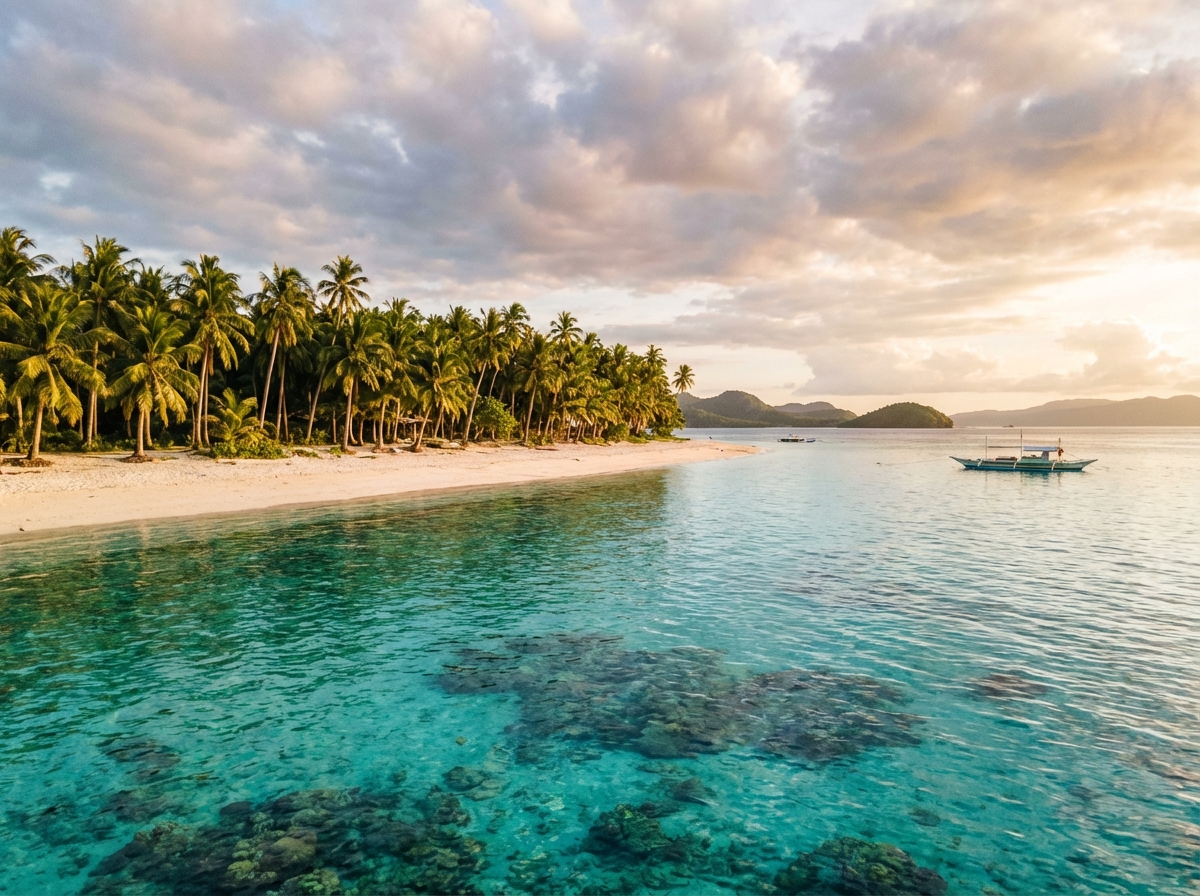 Wildlife
Whale Shark Watching
Oslob
Swim alongside gentle whale sharks, the world's largest fish, in one of the few places where these magnificent creatures can be reliably encountered.
WaterfallsKawasan Falls
Badian
A stunning three-tiered waterfall famous for its turquoise waters, bamboo raft rides, and as the endpoint of the famous Badian canyoneering adventure.
Diving & SnorkelingMoalboal Sardine Run
Moalboal
Swim with millions of sardines in one of the world's only year-round sardine runs, just meters from shore.
Mountains & HikingOsmeña Peak
Moalboal
Cebu's highest point at 1,013m featuring unique jagged hills and panoramic views, with an easy 15-30 minute hike.
IslandsMalapascua Island
Daanbantayan
A world-famous diving paradise known for thresher shark encounters, featuring beautiful white sand beaches and laid-back island vibes.