Everything a Japanese traveler needs for Cebu in 2026 — direct flights from Tokyo, Osaka, and Nagoya, 30-day visa-free entry, eTravel rules, the best diving and beaches, a short sample itinerary, and a budget in ¥ and ₱.
Quick Answer: Japan is Cebu's third-largest foreign market, and getting here is easy: direct flights from Tokyo Narita, Osaka Kansai (year-round), and Nagoya (seasonal) reach Mactan-Cebu (CEB) in about 4.5–5.5 hours. Japanese citizens enter visa-free for 30 days (just complete the free eTravel registration within 72 hours before arrival). Most Japanese visitors come for world-class diving (Moalboal, Malapascua), beaches and resorts on Mactan, and an easy English-speaking environment. Best time: the Philippine dry season, December–May, which overlaps Golden Week and makes a good winter escape. Verified June 2026 — confirm flights with the airline and visa rules with the embassy.
Some links on this page are affiliate links — if you book through them we may earn a small commission at no extra cost to you. We only recommend things we'd tell a friend to do.
Quick Facts for Japanese Travelers
| Item | Detail |
|---|---|
| Direct flights | Tokyo Narita (Cebu Pacific / PAL / United, year-round), Osaka Kansai (Cebu Pacific / PAL, year-round), Nagoya (PAL, seasonal) → Mactan-Cebu (CEB) |
| Flight time | About 4.5–5.5 hours |
| Visa | 30 days visa-free (EO 408) + free eTravel registration within 72h of arrival |
| Currency | Philippine peso (₱); around ₱2.6 = ¥1 |
| Best time | Dry season, December–May (overlaps New Year & Golden Week) |
| Language | English widely spoken; local language is Cebuano |
Verified June 2026. Flight routes change seasonally — confirm with the airline. Visa rules are current as of June 2026 — confirm with the Philippine embassy in Japan.
Cebu is one of the most popular Philippine destinations for Japanese travelers, and the numbers back it up: Japan is Cebu's third-largest foreign market, accounting for roughly 9.1% of foreign arrivals to Central Visayas in 2024. The reasons are practical — short direct flights, no visa hassle, English everywhere, and some of Asia's best diving a few hours from the airport.
How Do You Fly From Japan to Cebu?
You fly direct to Mactan-Cebu International Airport (CEB), the gateway for the whole region, in about 4.5–5.5 hours. There are year-round direct routes from Tokyo and Osaka and a seasonal route from Nagoya.
| From | Airlines | Frequency |
|---|---|---|
| Tokyo Narita (NRT) | Cebu Pacific, Philippine Airlines, United | Year-round |
| Osaka Kansai (KIX) | Cebu Pacific, Philippine Airlines | Year-round |
| Nagoya (NGO) | Philippine Airlines | Seasonal |
Verified June 2026 — routes and schedules change. Confirm with the airline before booking.
We don't quote fares here because they swing wildly by season and how early you book. Golden Week and New Year are the most expensive windows, so book early for those. Compare live prices on Skyscanner or Google Flights — set a price alert a couple of months out and you'll usually catch a fare drop. Cebu Pacific is the low-cost option; Philippine Airlines and United are full-service.
One practical note: Mactan-Cebu's Terminal 2 (international) is modern, compact, and easy to clear — far less stressful than Manila. You land right next to Mactan Island's resorts, so you can be at your hotel within 20–30 minutes of stepping off the plane.
Do Japanese Travelers Need a Visa for Cebu?
No. Japanese passport holders get 30 days visa-free entry to the Philippines under Executive Order 408 — you just arrive with a valid passport and a return or onward ticket. There is no visa to apply for in advance.
There is one required step that catches first-timers: eTravel registration. Every arriving traveler must complete the free online form at etravel.gov.ph within 72 hours before arrival. It takes a few minutes, costs nothing, and generates a QR code you show on arrival. Do not pay any third-party site claiming to do this for you — the official form is free.
If you want to stay longer than 30 days, you can extend at a Bureau of Immigration office in Cebu, and long-stay or retirement visitors often use the SRRV retirement visa program. Cebu is a well-established long-stay base for Japanese retirees precisely because of the English-speaking environment and low cost of living.
Verified June 2026 — visa and entry rules change. Confirm current requirements with the Philippine embassy in Japan before you fly.
When Is the Best Time to Visit Cebu?
The best time is the Philippine dry season, December through May — reliable sunshine, calm seas for diving and island hopping, and the lowest chance of a trip-disrupting storm.
This lines up neatly with the Japanese travel calendar. The New Year holidays and Golden Week (late April to early May) both fall inside the dry season, so you get the best Cebu weather during the times you're most likely to travel. Cebu is also a classic winter escape — leaving cold, grey Japan for 30°C beaches in January or February is one of the most popular reasons Japanese travelers come.
June to November is the wetter half of the year. It's not a washout — rain often comes in short bursts — but boat trips and canyoneering can be cancelled after heavy rain, and the typhoon season peaks in this window. If you travel then, build in flexible days and confirm tours the night before.
Cebu's dry season (December–May) overlaps both Japan's New Year holidays and Golden Week, making it the ideal time for Japanese travelers to visit for diving, beaches, and a warm winter escape.
What Do Japanese Travelers Love About Cebu?
Three things, mostly: diving, beaches, and easy resort relaxation — all in an English-speaking environment that makes the trip low-stress.
Diving — Cebu is a Major Dive Destination
Cebu is one of the top dive destinations in the Philippines, and diving is the single biggest draw for many Japanese visitors. Two sites stand out:
- Moalboal — the famous sardine run, where millions of sardines school in a permanent bait ball just 15–20 meters from shore. You can snorkel it straight from the beach, no boat needed. Nearby Pescador Island has dramatic reef walls and the light-shafted "Cathedral" cave. See the Moalboal sardine run & island hopping guide.
- Malapascua — world-famous for thresher sharks, sighted almost daily at Monad Shoal at dawn. It's one of the only places on earth where you can reliably dive with these deep-water sharks. See the Malapascua thresher shark diving guide.
Both are reachable from Mactan-Cebu airport: Moalboal is about 3 hours by road south; Malapascua is a drive north plus a short bangka (outrigger boat) crossing.
Beaches and Resorts
If you want sand and a pool rather than a tank, Mactan Island is built for it — a dense strip of beach resorts 20–30 minutes from the airport, ranging from affordable to five-star. It's the easiest soft landing for a short trip or a couples' getaway. Book Mactan stays on Agoda.
Day Trips From the City
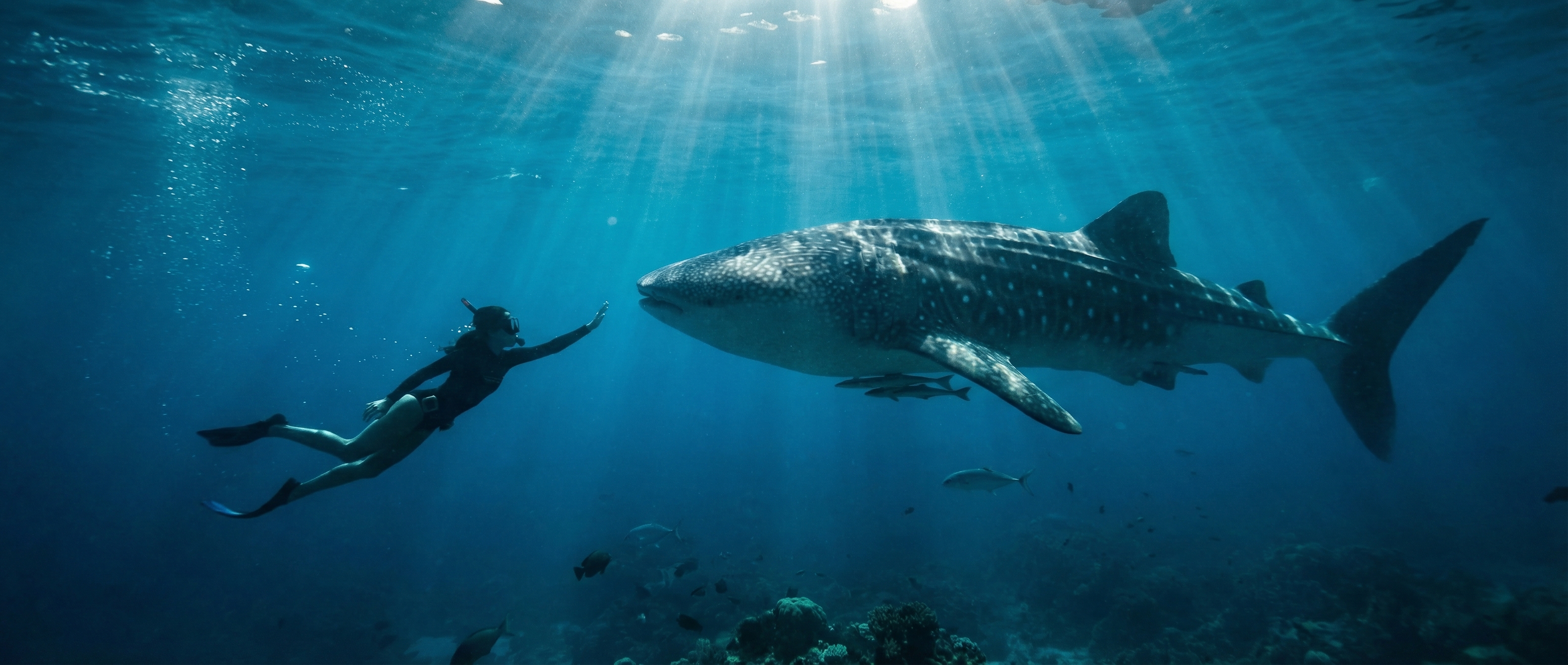
The classic Cebu day trips are easy add-ons: Oslob whale shark watching in the south and the turquoise Kawasan Falls for canyoneering. For the full menu, see our things to do in Cebu guide.
A Short Sample Itinerary for Japanese Travelers
Many Japanese travelers come for a short, focused trip rather than a long tour. Here's a relaxed 4-night plan that mixes diving, a beach, and one big day trip.
| Day | Plan | Base |
|---|---|---|
| Day 1 | Arrive Mactan (CEB), check in, beach/pool, dinner | Mactan |
| Day 2 | Transfer south to Moalboal — sardine run snorkeling, Pescador Island | Moalboal |
| Day 3 | Moalboal diving or day trip to Oslob whale sharks + Kawasan Falls | Moalboal |
| Day 4 | Return north, resort relaxation on Mactan | Mactan |
| Day 5 | Souvenir shopping, fly home from CEB | — |
If diving is your whole reason for coming, swap Days 2–4 for Malapascua and its thresher sharks instead. For a longer, more complete loop, follow our 5-day Cebu itinerary.
Where to Stay
Match your base to your trip. For a short or first trip, stay on Mactan Island — you're minutes from the airport and on the beach. For diving, sleep in Moalboal (Panagsama Beach) or Malapascua so you're at the dive sites at dawn.
- Mactan resorts — beach + pool, easy airport access, the soft-landing choice. Search Mactan hotels on Agoda.
- Moalboal — backpacker dorms to mid-range beachfront, walking distance to the sardine run.
- Malapascua — small dive-focused island resorts; book ahead, it's compact.
Mactan in particular fills up over Golden Week and New Year, so reserve early for those dates.
Budget in Yen (¥) and Pesos (₱)
Here's a realistic mid-range estimate for a 4–5 day trip, excluding international flights. The exchange rate used throughout is around ₱2.6 = ¥1 (June 2026).
| Item | Per day (₱) | Per day (¥) |
|---|---|---|
| Mid-range hotel | ₱3,000–6,000 | ¥1,150–2,300 |
| Food (3 meals) | ₱800–1,500 | ¥300–580 |
| Tours / diving | ₱1,500–4,000 | ¥580–1,540 |
| Local transport | ₱300–1,000 | ¥115–385 |
Verified June 2026. Rate ≈ ₱2.6 = ¥1; rates move, so treat ¥ figures as approximate.
A mid-range 4–5 day trip lands somewhere around ¥80,000–130,000 all-in on the ground (hotels, tours, food, transport), before flights. Backpackers using dorms, buses, and beach snorkeling instead of boat dives can do it for a fraction of that. Resort-only stays on Mactan, with full-service diving, push it higher. Carry pesos in cash for tricycles, tours, and small eateries — yen is not accepted for everyday payments, so exchange at the airport or a mall, or withdraw from ATMs.
The Honest Take
Cebu is genuinely one of the easiest international trips a Japanese traveler can make — short flight, no visa, English everywhere, warm sea. But a few honest caveats save disappointment.
Cebu City itself is not the beach. First-timers sometimes expect to land and walk onto white sand. Cebu City is a busy, traffic-heavy urban hub; the beaches are on Mactan and the dive towns are hours away. Plan your transfers — don't book a city hotel expecting a resort.
Distances are real. Moalboal and Oslob are roughly 3 hours each from the airport on roads that get congested on weekends and holidays. Don't try to cram whale sharks, canyoneering, and the sardine run into a single day from Mactan — you'll spend the trip in a van.
Diving conditions depend on the season. The thresher sharks and sardines are there year-round, but heavy rain in June–November can cancel boats and cloud visibility. If diving is the whole point of your trip, come in the dry season.
Oslob whale sharks are ethically debated. The whale sharks there are fed to keep them in place, which many divers and conservationists object to. We mention it so you can decide for yourself — wild encounters on dive trips elsewhere exist but aren't guaranteed.
None of this is a reason to skip Cebu. It's a reason to plan around geography and season — and if you do, it delivers exactly the easy, warm, diving-and-beach trip most Japanese travelers come for.
Plan Your Cebu Trip
Cebu earns its place as a favorite for Japanese travelers: a 4.5–5.5 hour flight, 30-day visa-free entry, world-class diving, and an English-speaking environment that takes the friction out of travel. Start with the things to do in Cebu overview, lock in your best time to visit, then dive into Moalboal and Malapascua.
When you're ready to book, browse Cebu tours and activities on Klook and find your base on Agoda. For flights, compare on Skyscanner and set a price alert early.
Book Tours & Hotels for This Trip
Find and book the best deals — prices and availability update in real time. Links open in a new tab.
Frequently Asked Questions
Do Japanese travelers need a visa for Cebu?
No. Japanese passport holders get 30 days visa-free entry to the Philippines under Executive Order 408. You must also complete the free eTravel registration at etravel.gov.ph within 72 hours before arrival. Verified June 2026 — confirm with the Philippine embassy before you fly.
Are there direct flights from Japan to Cebu?
Yes. Direct flights land at Mactan-Cebu (CEB) from Tokyo Narita (Cebu Pacific, Philippine Airlines, United — year-round), Osaka Kansai (Cebu Pacific, Philippine Airlines — year-round), and Nagoya (Philippine Airlines — seasonal). Flight time is about 4.5–5.5 hours. Verified June 2026 — confirm routes with the airline.
What is the best time of year for Japanese travelers to visit Cebu?
The Philippine dry season runs December–May, which lines up well with Japan's New Year holidays and Golden Week (late April to early May). Cebu is also a popular winter escape from cold Japan. Diving and beaches are best in the dry months; June–November is wetter and can disrupt boat trips.
How much does a Cebu trip cost for a Japanese traveler?
A mid-range 4–5 day trip runs roughly ¥80,000–130,000 (₱100,000–160,000 equivalent excluding flights at around ₱2.6 = ¥1, June 2026), covering hotels, tours, food, and transport. Backpackers can travel for far less; resort stays on Mactan cost more. Flights are extra — check Skyscanner.
Is Cebu good for diving?
Yes — Cebu is one of the Philippines' top dive destinations. Moalboal has the famous sardine run and Pescador Island reef walls, while Malapascua is world-famous for daily thresher shark sightings at Monad Shoal. Both are reachable from Mactan-Cebu airport in a few hours.
Is English spoken in Cebu?
Yes. English is an official language and is widely spoken in hotels, tours, restaurants, and dive shops. Many Japanese travelers find Cebu easy to navigate because signage, menus, and staff communication are commonly in English. The local language is Cebuano.
What currency is used in Cebu and can I use yen?
The currency is the Philippine peso (₱). Yen is not accepted for everyday payments — exchange yen for pesos at the airport or in malls, or withdraw pesos from ATMs. Cards work at hotels and larger establishments, but carry cash for tours, tricycles, and small eateries. Around ₱2.6 = ¥1, June 2026.
How long can Japanese retirees or long-stay visitors stay in Cebu?
Visa-free entry is 30 days, but it can be extended at a Bureau of Immigration office in Cebu. Long-stay and retirement visitors often use the SRRV retirement visa program. Cebu is a popular long-stay base for Japanese retirees thanks to the English environment and low cost of living. Verified June 2026 — confirm current rules with the Bureau of Immigration.
More Places to Explore
 Diving & Snorkeling
Moalboal Sardine Run
Moalboal
Swim with millions of sardines in one of the world's only year-round sardine runs, just meters from shore.
IslandsPescador Island
Moalboal
A world-class marine sanctuary featuring The Cathedral underwater cave and exceptional wall diving.
IslandsMalapascua Island
Daanbantayan
A world-famous diving paradise known for thresher shark encounters, featuring beautiful white sand beaches and laid-back island vibes.
WildlifeWhale Shark Watching
Oslob
Swim alongside gentle whale sharks, the world's largest fish, in one of the few places where these magnificent creatures can be reliably encountered.