A practical Cebu guide for US travelers — how to fly there (no direct flights), the visa-free rules, eTravel registration, best time to visit, what to do, and a realistic budget in dollars and pesos.
Quick Answer: Americans don't need a visa for Cebu — US citizens get 30 days visa-free entry under EO 408, and every arrival registers free on eTravel (etravel.gov.ph) within 72 hours of landing. There are no direct flights from the US, so you connect via Manila, Tokyo, Seoul, or a Gulf hub like Doha or Dubai, for about 18–24 hours of total travel. The best time to go is December–May (US summer is the Philippine wet season). English is spoken everywhere, the currency is the peso (₱58 ≈ US$1, June 2026), and you'll want a voltage converter for the 220V outlets. Verified June 2026 — confirm visa and flight details with your embassy and airline.
Cebu is one of the easiest first trips to the Philippines for an American — whale sharks, world-class diving, waterfall canyoneering, and a walkable colonial city, all within a few hours of each other. The US is Cebu's second-largest foreign market, making up roughly 9.4% of Central Visayas foreign arrivals in 2024, and a big share of those visitors are Filipino-Americans coming home to see family. This guide is written for the American planning the trip: how to get there, the entry rules, when to go, what it costs in dollars, and what's actually worth your time.
Quick Facts for US Travelers
| Detail | What to know |
|---|---|
| Flights / connections | No direct flights from the US. Connect via Manila, Tokyo, Seoul, or a Gulf hub (Doha/Dubai) into Mactan-Cebu (CEB) |
| Travel time | ~18–24 hours total, including one or two layovers |
| Visa | 30 days visa-free for US citizens (EO 408). Register free on eTravel within 72h of arrival |
| Currency | Philippine peso (₱). ₱58 ≈ US$1 (June 2026). Carry pesos; cards work in malls/hotels |
| Best time | December–May (dry season). US summer = PH wet season |
| Plugs / power | 220V, plug types A/B/C. Bring a voltage converter (US is 120V) |
Verified June 2026. Confirm visa rules with the Philippine embassy and flight details with your airline before you book.
How Do You Fly From the US to Cebu?
There are no nonstop flights from the United States to Cebu — you'll always connect at least once. Mactan-Cebu International Airport (code CEB) sits on Mactan Island, a short drive from Cebu City.
From the US, the common routings are:
- Via Manila (MNL): Fly to Manila on a carrier like Philippine Airlines, then take a short domestic hop down to Cebu (about 1.5 hours). This is often the most straightforward for Filipino-American travelers already headed to Manila.
- Via an Asian hub: Connect through Tokyo (Narita/Haneda), Seoul (Incheon), or another East Asian airport, then onward to Cebu — sometimes directly into CEB, sometimes via Manila.
- Via a Middle East hub: Qatar Airways (Doha) and Emirates (Dubai) route from major US cities through the Gulf into the Philippines. Longer in raw miles but often comfortable and competitively priced.
Total travel time runs roughly 18–24 hours including layovers, depending on your home city and routing. Fares swing a lot by season and how far ahead you book, so don't take any quoted number as gospel — compare live routings and prices on Skyscanner or Google Flights (these are neutral flight search tools, not sponsored). Book the long-haul leg well ahead for the December–May high season.
Once you land at CEB, a metered taxi or a Grab (the local ride-hailing app, like Uber) gets you into Cebu City or to your Mactan resort in 20–45 minutes depending on traffic.
Do Americans Need a Visa for Cebu?
No — US citizens get 30 days visa-free entry to the Philippines under Executive Order 408. You're admitted on arrival; there's no advance application for a standard tourist stay of 30 days or less. You'll need a passport valid for at least six months beyond your arrival and proof of onward or return travel.
There is one mandatory step, and it's free: every arrival must register on eTravel at etravel.gov.ph within 72 hours before arrival. This is a short online health-and-travel declaration, not a visa. Complete it before you fly and save the QR code — immigration and airline staff may ask for it. It's free; ignore any third-party site that tries to charge you for it.
If you want to stay longer than 30 days, you can extend at a Bureau of Immigration office in the Philippines, or arrange a longer visa in advance. Verified June 2026 — entry rules change, so confirm the current policy with the Philippine embassy or consulate before you travel.
When Is the Best Time to Visit Cebu?
The best time is the dry season, December through May. This is when you get the most reliable conditions for everything Cebu is known for — beaches, diving, island hopping, and especially Kawasan Falls canyoneering, which operators cancel after heavy rain.
Here's the catch for Americans: US summer (June–September) is the Philippine wet season. Schools are out and it's the natural time for many families to travel, but it's also when Cebu sees the most rain and a small typhoon risk. It's still very doable — rain often comes in short afternoon bursts rather than all-day washouts, and whale sharks in Oslob run year-round — but if you have a choice, aim for the dry months.
For a month-by-month breakdown of weather, crowds, and prices, see the best time to visit Cebu guide.
Cebu's best window is December–May; US summer falls in the Philippine wet season, so expect more rain if you travel June–September. Verified June 2026.
What Is There to Do in Cebu?
Cebu packs a remarkable range into a small area. The headline experiences:
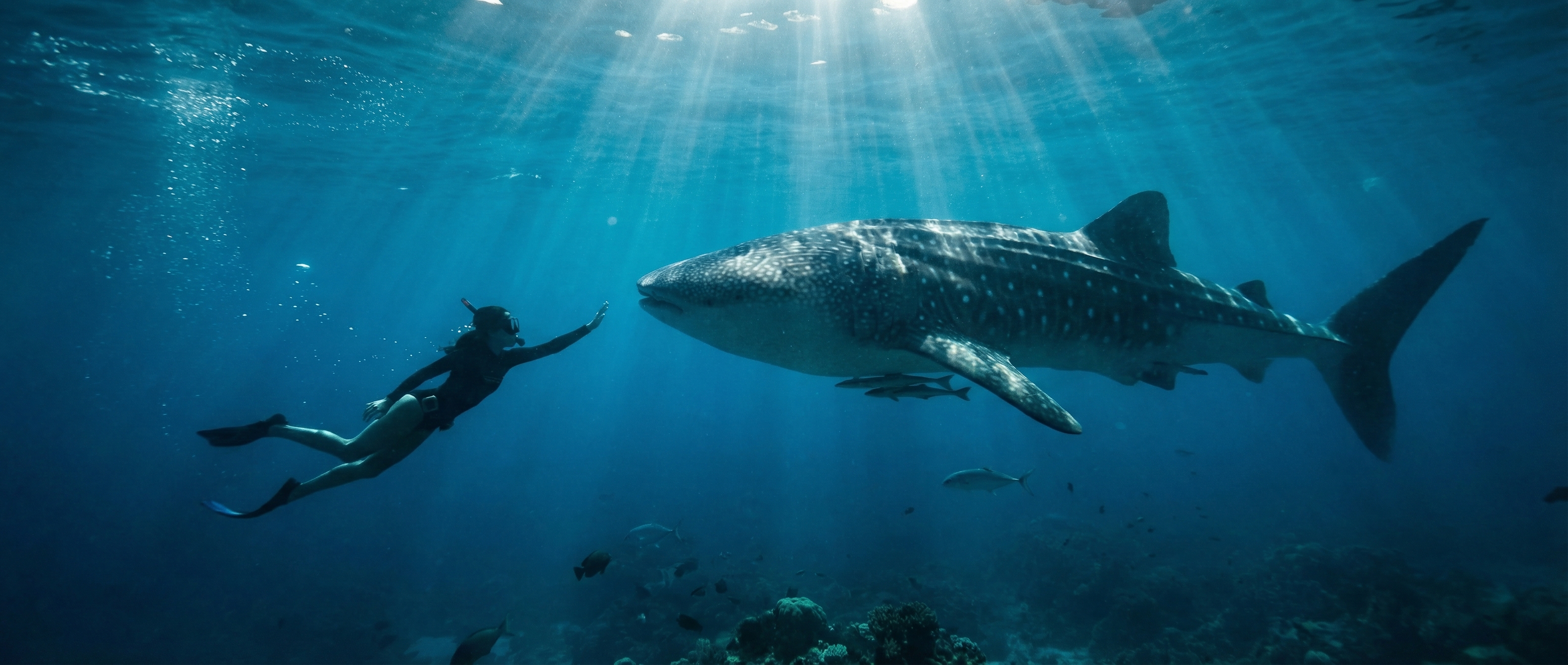
- Swim with whale sharks in Oslob. The single most famous Cebu activity — gentle giants gather in the shallows off Oslob and you snorkel alongside them. It's also the most debated on ethics, which we cover honestly in the Oslob whale sharks guide.
- Canyoneering at Kawasan Falls. A 3–4 hour adventure jumping, swimming, and rappelling down the Matutinao River canyon to the turquoise Kawasan Falls. The standout for active travelers — details in the Kawasan canyoneering guide.
- The Moalboal sardine run. Millions of sardines school just offshore in a permanent bait ball you can snorkel into straight from the beach — see the Moalboal sardine run.
- Diving and snorkeling at Pescador Island. A protected marine sanctuary off Moalboal with the famous "Cathedral" cave — one of the best dive sites in the country. See Pescador Island.
- Cebu City heritage. Magellan's Cross, the Basilica del Santo Niño, and Fort San Pedro tell the story of where Spanish colonization of the Philippines began in 1521.
For the full menu, browse the things to do in Cebu guide. Tours for all of the above can be booked online ahead of time — search Cebu tours and activities on Klook to lock in slots, especially on weekends.
What's a Good Sample Itinerary?
For a first US trip, a week is the sweet spot once you account for jet lag and the long flights. A simple structure:
- Days 1–2 — Cebu City + Mactan. Recover from the flight, see the heritage core, and enjoy a beach resort on Mactan.
- Days 3–5 — Go south. Oslob whale sharks, Kawasan canyoneering, and Moalboal's sardine run and diving, basing yourself in Moalboal to avoid backtracking.
- Days 6–7 — Buffer and slow down. An island-hopping day, Osmeña Peak, or simply beach time before the long haul home.
If you have less time, the 5-day Cebu itinerary covers the southern highlights at a comfortable pace. With more, the 7-day Cebu itinerary adds an island like Bantayan and more breathing room — which you'll appreciate after a 20-hour flight.
The Balikbayan Angle: Combining Family + Travel
A large share of Cebu's American visitors are balikbayans — Filipino-Americans returning to visit family — and Cebu is ideal for combining the two. The usual pattern is to spend the first several days with relatives (often in or around Cebu City, or in a home province), then peel off for a short two- or three-day trip down south.
That works because Cebu's marquee attractions are clustered along the southwest coast and easy to reach independently. From the South Bus Terminal in Cebu City, air-conditioned Ceres buses (a long-haul provincial bus line) run south to Oslob, Badian (for Kawasan), and Moalboal for low fares — typically ₱120–220 (about US$2–4) per leg. So you can give family their days and still get the whale-shark-and-canyoneering experience without committing your whole trip to it.
If relatives are picking you up at the airport, the eTravel QR code and the visa-free entry still apply to you as a US passport holder — being Filipino-American doesn't change the immigration process unless you hold a Philippine passport or a balikbayan privilege you've arranged separately.
Where Should You Stay?
Two bases cover most US trips:
- Mactan Island — beach resorts a short drive from the airport, good for arrival, departure, and pure beach days. Ranges from mid-range to high-end.
- Cebu City (IT Park / Ayala area) — central for heritage sights, restaurants, and as the jump-off for southern day trips. Better value and more local energy.
For the deep dive on neighborhoods and specific picks, read where to stay in Cebu City. To compare prices and availability, search Cebu hotels on Agoda — you'll find budget guesthouses from around ₱800/night (US$14) up to beachfront resorts at ₱6,000+/night (US$100+).
If you're doing the southern loop, also reserve a night or two in Moalboal — it books out on weekends.
What Will a Cebu Trip Cost in US Dollars?
Cebu is inexpensive by US standards. The rate used throughout this guide is ₱58 ≈ US$1 (June 2026); here's a per-person daily picture once you're on the ground (excluding the international flight):
| Item | Peso | US$ |
|---|---|---|
| Mid-range hotel (per night) | ₱2,500–4,000 | $43–69 |
| Budget guesthouse (per night) | ₱800–1,500 | $14–26 |
| Meals (per day) | ₱400–800 | $7–14 |
| Oslob whale shark interaction | ₱500–1,000 | $9–17 |
| Kawasan canyoneering | ₱1,500–1,800 | $26–31 |
| Ceres bus, one leg (city → south) | ₱120–220 | $2–4 |
| Grab/taxi, airport → city | ₱250–500 | $4–9 |
Verified June 2026. ₱58 ≈ US$1. Prices vary by season and operator.
As a rough planning figure, a comfortable mid-range traveler spends about US$50–90 per day on the ground (hotel, food, activities, local transport), not counting the international airfare. Budget travelers using dorms and buses can come in well under that. The flight is your biggest single cost — that's where the dollars go, not the trip itself.
The Honest Take: Jet Lag, the Long Haul, and What to Skip
A few candid points before you book:
The flight is the real obstacle, not Cebu. There's no way around the 18–24 hour journey and at least one connection. Budget a full recovery day on arrival — the time difference from the US is large (Cebu is 12–16 hours ahead of the US mainland), and jet lag after a flight this long is real. Don't schedule the 3:30 AM Oslob bus for your first morning.
Don't over-plan a short trip. US travelers sometimes try to cram Bohol, Siargao, and Palawan into the same trip as Cebu. Each is a separate flight or long ferry. For a first visit of a week or so, do Cebu well rather than spreading thin — the southern loop alone is plenty.
Whale sharks are a personal call. The Oslob experience is unforgettable, but the practice of feeding wild whale sharks to keep them in place draws legitimate criticism. Read the Oslob guide and decide for yourself — we lay out both sides.
Skip the tourist-trap transfers if you're game to DIY. Private van tours are sold heavily to foreigners, but the Ceres buses are cheap, air-conditioned, and easy. If you're comfortable traveling independently (and English makes it easy), you'll save a lot.
Carry pesos. Cards work in malls and resorts, but buses, tricycles, market food, and small operators are cash. Pull pesos from an ATM on arrival rather than relying on plastic everywhere.
Plan and Book Your Cebu Trip
Cebu rewards a little planning: sort the long-haul flight early, file your free eTravel before you fly, aim for the December–May dry season, and pack a voltage converter for the 220V outlets. Beyond that, English everywhere and low costs make it an easy place to travel.
Start with the things to do in Cebu and the 5-day itinerary, then read up on the headline experiences: Oslob whale sharks, Kawasan Falls, the Moalboal sardine run, and Pescador Island.
When you're ready to lock things in, search Cebu tours on Klook for activities and search Cebu hotels on Agoda for somewhere to stay — and compare your flights on Skyscanner before you commit.
Book Tours & Hotels for This Trip
Find and book the best deals — prices and availability update in real time. Links open in a new tab.
Frequently Asked Questions
Do US citizens need a visa to visit Cebu?
No. US citizens get 30 days visa-free entry to the Philippines under Executive Order 408. You don't apply in advance — you're admitted on arrival as long as you have a passport valid for at least six months and an onward or return ticket. Every arrival must also complete the free eTravel registration at etravel.gov.ph within 72 hours before landing. Verified June 2026 — confirm with the Philippine embassy before you travel.
Are there direct flights from the US to Cebu?
No. There are no nonstop flights from the United States to Cebu (Mactan-Cebu International Airport, CEB). You connect through Manila, Tokyo, Seoul, or a Middle East hub such as Doha or Dubai. Total travel time runs roughly 18–24 hours including the layover. Compare routings on Skyscanner or Google Flights. Verified June 2026 — confirm with your airline.
What is the best time of year for Americans to visit Cebu?
December to May is the dry season and the best window for beaches, diving, and canyoneering. US summer (June–September) is the Philippine wet season, with more rain and a small typhoon risk. Whale sharks in Oslob run year-round, but if you only get one trip, aim for the December–May dry months. Verified June 2026.
How long is the flight from the US to Cebu?
Plan on about 18–24 hours of total travel time door to airport, including one or two connections. There are no direct flights, so the exact time depends on whether you route through Asia (Tokyo, Seoul, Manila) or the Middle East (Doha, Dubai). Verified June 2026 — confirm with your airline.
What currency is used in Cebu and can I use US dollars?
The currency is the Philippine peso (₱). At the rate used in this guide, ₱58 ≈ US$1 (June 2026). You generally cannot pay in US dollars day to day — exchange cash or withdraw pesos from ATMs on arrival. Cards work in malls, hotels, and tour operators, but carry pesos for buses, tricycles, and local eateries.
Do I need a power adapter for Cebu?
Yes. The Philippines runs on 220V, while the US runs on 120V. Outlets accept plug types A, B, and C. US flat-pin plugs often fit type A sockets, but the voltage is double, so bring a voltage converter for anything that isn't dual-voltage. Phone and laptop chargers are usually dual-voltage (check the label, 100–240V); hair dryers and similar appliances are not.
Is English widely spoken in Cebu?
Yes. English is an official language and is spoken almost everywhere — at the airport, hotels, restaurants, tour operators, and on signage. The local language is Cebuano (Bisaya), but you'll have no trouble getting around, booking tours, or asking directions in English.
Can I combine a Cebu trip with visiting family in the Philippines?
Absolutely — many US visitors to Cebu are Filipino-Americans (balikbayans) combining a family visit with travel. Cebu makes a natural base: spend a few days with family, then break away for two or three days down south for whale sharks, canyoneering, and Moalboal. The southern loop is easy to do as a short add-on from Cebu City.
More Places to Explore
 Wildlife
Whale Shark Watching
Oslob
Swim alongside gentle whale sharks, the world's largest fish, in one of the few places where these magnificent creatures can be reliably encountered.
WaterfallsKawasan Falls
Badian
A stunning three-tiered waterfall famous for its turquoise waters, bamboo raft rides, and as the endpoint of the famous Badian canyoneering adventure.
Diving & SnorkelingMoalboal Sardine Run
Moalboal
Swim with millions of sardines in one of the world's only year-round sardine runs, just meters from shore.
IslandsPescador Island
Moalboal
A world-class marine sanctuary featuring The Cathedral underwater cave and exceptional wall diving.