A Cebu local's honest case for why Cebu is the easiest island for a first Philippine trip — a major international airport, English everywhere, world-class diving, waterfalls, beaches and a real city in one province — plus the downsides nobody warns you about.
Quick Answer: For most first-time foreign visitors, Cebu is the easiest island in the Philippines to start with. You fly straight into Mactan-Cebu International Airport on direct flights from Korea, Japan, Taiwan, Singapore and the Middle East — no extra domestic connection. English is an official language and spoken everywhere, so you can plan and run the whole trip without a language barrier. And one province gives you world-class diving, whale sharks, waterfalls and canyoneering, the year-round Moalboal sardine run, island beaches, a real city, and Spanish-era heritage — plus a central base for island-hopping the rest of the Visayas. Most nationalities get 30 days visa-free; just file your eTravel within 72 hours of arrival. Five days is the sweet spot. Browse Cebu tours on Klook to start planning. Verified June 2026.
Some links on this page are affiliate links — if you book through them we may earn a small commission at no extra cost to you. We only recommend things we'd tell a friend to do.
The Philippines has more than 7,000 islands, and that abundance is exactly what overwhelms a lot of first-time visitors. Where do you even land? Which island first? How many flights does it take just to reach a beach? We write as locals, and our honest answer for a first Philippine trip is almost always the same: start with Cebu. Not because it's the only place worth seeing — it isn't — but because it's the lowest-friction way to actually experience what makes the country special without spending half your holiday in transit or decoding logistics.
Below is the persuasive-but-honest case: why Cebu works, what you can really do here, how long you need, and the downsides we'd want a friend to know before booking.
Why Cebu Works for First-Timers (2026)
| Factor | Why it matters |
|---|---|
| Easy access | Direct international flights into Mactan-Cebu (Korea, Japan, Taiwan, Singapore, the Middle East and more) — no extra domestic hop just to arrive. |
| English everywhere | English is an official Philippine language; signs, menus, hotels, drivers and tour operators all work in English. Zero language barrier. |
| Huge variety | World-class diving, whale sharks, waterfalls + canyoneering, island beaches, a real city, and Spanish-era heritage — all in one province. |
| Good value | Food, local transport and many activities are inexpensive by Western standards; a mid-range budget goes far. |
| Safety & infrastructure | A genuine city with hospitals, malls, ATMs and reliable connectivity, plus established tourist infrastructure around the main sights. |
| Base for island-hopping | A central Visayas hub — easy onward ferries and flights to Bohol, Siquijor, Negros, Leyte and beyond once you're hooked. |
Verified June 2026.
Is Cebu Good for First-Time Visitors to the Philippines?
Yes — for most first-timers, Cebu is the easiest island to start with. The reason is simple: it removes the two things that trip people up on a first Philippine trip — getting there, and the language barrier — while still delivering the full range of what the country is famous for.
You arrive at Mactan-Cebu International Airport, a modern gateway a short drive from both Cebu City and the Mactan resort strip. From there, the headline experiences are within a few hours by road. You don't need to be an experienced traveler, a diver, or a Tagalog speaker to have a great week here. That combination — real adventure with a low difficulty floor — is what makes Cebu the natural first chapter of a Philippine trip.
Why Is Cebu Easier Than Other Philippine Destinations?
Cebu is easier mostly because of geography and airports. Many of the country's most-hyped destinations require a connecting domestic flight (or a domestic flight plus a van plus a boat) just to begin your holiday. Cebu lets you skip that.
Mactan-Cebu is one of the Philippines' busiest international gateways, with direct flights from Korea, Japan, Taiwan, Singapore, the Middle East and other hubs. You land, sleep, and you're already a short drive from your first beach or a few hours from a waterfall canyon — no second airport, no overnight in Manila to make a connection. Once you're in Cebu, the variety is so concentrated that you rarely need to travel far between completely different experiences: a heritage city walk, a mountain sunrise, and a dive site can all sit within the same province.
It's also a hub, not a dead end. When Cebu makes you fall for the Philippines (it usually does), Bohol, Siquijor, Negros and Leyte are short ferry or flight hops away — so Cebu doubles as the launchpad for everything you do next.
What Can You Actually Do in Cebu?
A lot — and that's the point. Few single provinces in Southeast Asia pack this much variety into a few hours' driving radius. Here's the spread of what's on offer:
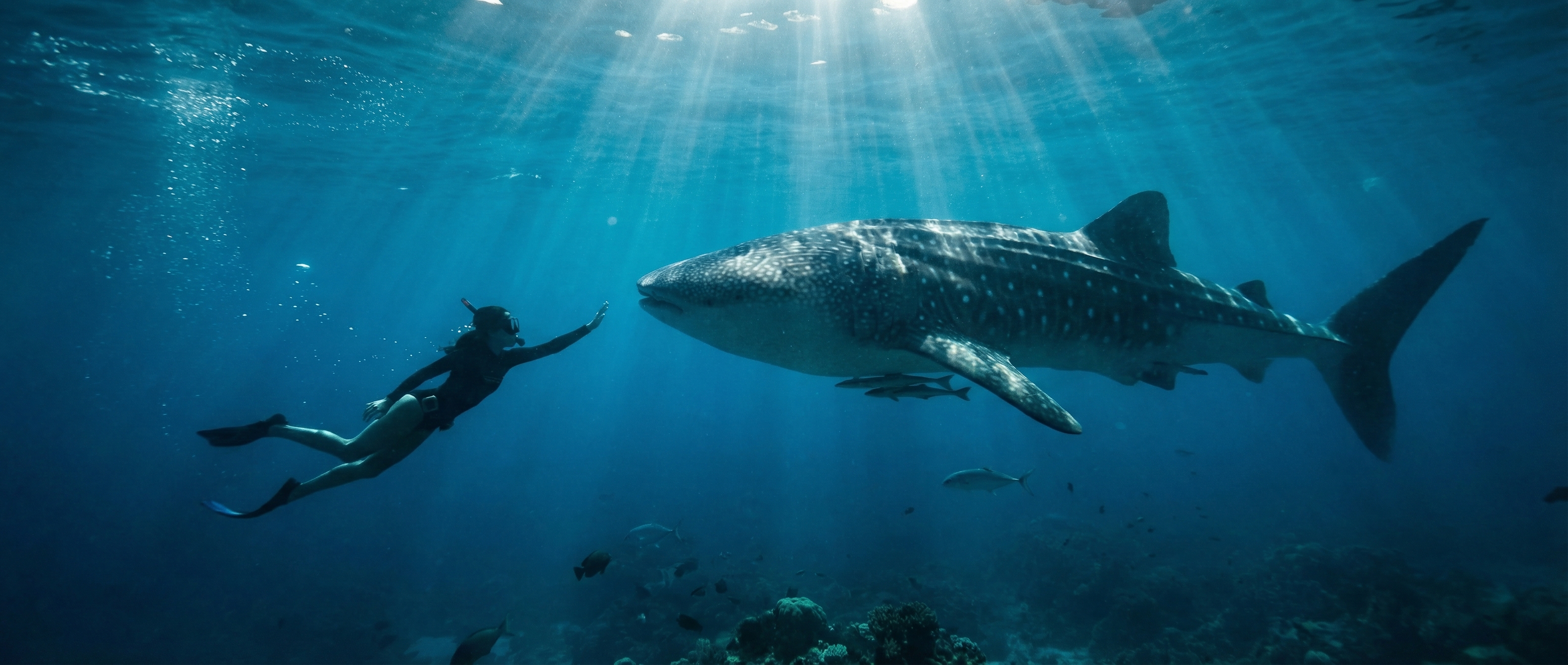
- Whale sharks — Swim alongside gentle, bus-sized whale sharks at Oslob whale shark watching in the south. Near-guaranteed sightings, and Cebu's most famous single experience.
- Waterfalls and canyoneering — Jump, swim and rappel through a turquoise river gorge to Kawasan Falls in Badian. In our view, the best single adventure in Cebu.
- The sardine run — Snorkel straight off the shore into a swirling silver tornado of millions of fish at the Moalboal sardine run — present year-round, and one of the best free snorkeling spectacles anywhere.
- Island-hopping and diving — Boat out to Pescador Island for drop-offs, turtles and the famous "Cathedral" swim-through, or dive with wild thresher sharks at dawn in Malapascua.
- Mountains and viewpoints — Hike to Osmeña Peak, the province's highest point, for a sawtooth ridgeline sunrise often above a sea of clouds.
- City and heritage — Walk Cebu City's compact Spanish-era core, the oldest in the country, around Magellan's Cross and Fort San Pedro.
For the full breakdown with verified 2026 fees and honest takes on each, see our complete things to do in Cebu guide. The short version: you can fill a week here without ever repeating yourself.
How Long Do You Need in Cebu?
Five days is the sweet spot for a first visit. That gives you two days for the south coast (whale sharks, Kawasan canyoneering, the Moalboal sardine run), one or two days for islands or beaches, and a day for Cebu City — without the rushed, exhausting pace that ruins a holiday.
With three days, pick a lane: either the south-coast adventure loop or a single island base, not both. A week lets you add an island like Bantayan or Malapascua without backtracking. Our 5-day Cebu itinerary routes the headline experiences in a logical south-then-city flow so the long coastal drives work in your favor rather than against you — strongly recommended for a first trip.
Is Cebu Beginner-Friendly? (English and Getting Around)
Yes, on both counts. English is an official language of the Philippines and is widely spoken across Cebu — signs, menus, hotels, drivers, tour operators and shop staff all communicate in English. You can plan, book and run an entire trip without learning a single word of Cebuano or Filipino. For a first-time visitor, that removes the biggest source of travel stress before you even arrive.
Getting around is straightforward too. The airport is a short drive from both Cebu City and Mactan's resorts. Within the city, ride-hailing apps and taxis are easy. For the sights, Ceres buses from Cebu City's South Bus Terminal reach the south coast cheaply, but most first-time foreign visitors simply book day tours with transport included or hire a private van for the south-coast loop — which neatly sidesteps the only real friction points (city traffic and the long, winding coastal roads).
On entry: most nationalities get 30 days visa-free on arrival, with no advance visa required — you just complete the online eTravel registration within 72 hours before you land. Confirm the rules for your specific passport in our Philippines visa-free entry guide before you fly.
The Honest Take: What to Know Before You Go
Cebu is the easiest first trip, but it isn't flawless, and a good local tells you the rough edges too.
- Cebu City traffic is heavy. Congestion in and around the city is real and can eat hours, especially at rush hour. Base yourself sensibly, leave early for the south, and don't schedule a tight connection through the city center.
- Some sites are crowded and touristy. Oslob whale shark watching in particular draws big tour crowds and is the island's most ethically debated activity, since the sharks are hand-fed to stay near the boats. Plenty of travelers love it; others regret it. If that troubles you, the wild Moalboal sardine run and wild thresher diving in Malapascua are provisioning-free alternatives. Go early, go midweek, and your experience at the popular sites improves dramatically.
- The wet season runs June to November. Expect rain and the occasional typhoon, which can cancel canyoneering when the river rises and disrupt ferry crossings. It's not a no-go — deals are cheaper and crowds thinner — but build in buffer days and confirm conditions locally. Our best time to visit Cebu guide breaks down the months in detail.
None of these are dealbreakers. They're the kind of thing you simply plan around — and knowing them in advance is exactly what separates a smooth first trip from a frustrating one.
Where to Stay and Start Planning
For a first trip, base yourself near the airport and the city to begin: Cebu City or Mactan. The city puts you near heritage sights, food and onward transport; Mactan puts you on the beachfront resort strip minutes from arrivals. Our where to stay in Cebu City guide breaks down the best neighborhoods for first-timers. Many visitors split their stay — a couple of nights near the city, then a beach base in the south near Moalboal for the adventure days.
Compare Cebu hotels and resorts on Agoda to find a base that fits your route, and browse Cebu tours on Klook — the slot-limited activities like whale sharks and canyoneering fill up on weekends and holidays, so reserving ahead saves a wasted morning.
Start Here: Your First Cebu Trip
If you take one thing from this guide: Cebu is the easiest, lowest-friction way to experience the Philippines for the first time — a real international airport, English everywhere, and a single province that delivers diving, whale sharks, waterfalls, island beaches and heritage, all close together. Plan around the traffic, the crowds at Oslob, and the wet season, and there's very little to go wrong.
Start with two pages: our things to do in Cebu guide to see everything on offer with verified 2026 fees, and our 5-day Cebu itinerary to thread it all together for a first visit. Sort your entry with the Philippines visa-free entry guide, pick your window with the best time to visit Cebu guide, then browse tours on Klook and compare hotels on Agoda when you're ready to book.
Book Tours & Hotels for This Trip
Find and book the best deals — prices and availability update in real time. Links open in a new tab.
Frequently Asked Questions
Is Cebu good for first-time visitors to the Philippines?
Yes — for most first-timers it's the single easiest entry point. Cebu has a major international airport with direct flights from Korea, Japan, Taiwan, Singapore and the Middle East, English is widely spoken, and one province packs world-class diving, whale sharks, waterfalls with canyoneering, island beaches, a real city, and Spanish-era heritage. It's also a central hub for island-hopping the rest of the Visayas. Verified June 2026.
Why is Cebu easier than other Philippine destinations?
Cebu lets you skip the long domestic connection most other islands require. You fly straight into Mactan-Cebu International Airport from several Asian and Middle Eastern hubs, then reach diving, waterfalls and beaches within a few hours by road — no second flight or multi-leg ferry just to start your trip. The mix of city comfort and adventure in one place means you don't have to choose between infrastructure and nature.
Do people speak English in Cebu?
Yes. English is an official language of the Philippines and is widely spoken in Cebu — on signs, menus, in hotels, with tour operators, drivers and shop staff. You can plan and run an entire trip in English without learning a word of Cebuano or Filipino, which is a big reason first-time visitors find Cebu low-stress.
What can you actually do in Cebu?
A lot, all close together: swim with whale sharks in Oslob, canyoneer to Kawasan Falls in Badian, snorkel the year-round Moalboal sardine run, island-hop to Pescador and Sumilon, dive with thresher sharks in Malapascua, hike Osmeña Peak, and walk the Spanish-era heritage core of Cebu City. Few single provinces in Southeast Asia offer this much variety within a few hours' drive. Verified June 2026.
How long do you need in Cebu for a first trip?
Five days is the sweet spot for a first visit — two days for the south coast (Oslob, Kawasan, Moalboal), one or two for islands, and one for Cebu City. Three days works if you focus on the south-coast loop or one island base. A week lets you add Bantayan or Malapascua without rushing.
Do I need a visa to visit Cebu?
Most nationalities get 30 days visa-free entry to the Philippines on arrival — no advance visa needed. You do need to complete the online eTravel registration within 72 hours before you land. Check the rules for your passport before you fly; full details are in our Philippines visa-free entry guide. Verified June 2026.
Is Cebu beginner-friendly for getting around?
Yes. The airport is a short drive from Cebu City and Mactan's resorts, English works everywhere, and ride-hailing, taxis, Ceres buses and booked day tours all reach the main sights. Many first-timers simply book day tours or a private van for the south-coast loop, which removes the only real friction — Cebu City traffic and the long, winding coastal roads.
What are the downsides of Cebu for first-time visitors?
Cebu City traffic is heavy and can eat hours, some sites get crowded and touristy (Oslob whale shark watching especially), and the June–November wet season brings rain and occasional storms that can cancel canyoneering and ferries. None of these are dealbreakers — you plan around them — but an honest first-timer should know them going in.
Is Cebu good value for foreign travelers?
Generally, yes. Food, local transport and many activities are inexpensive by Western standards, and you can travel comfortably on a mid-range budget. The big-ticket spends are diving and canyoneering tours; beaches, peaks, heritage sites and street food are cheap or nearly free. Bring cash, as many rural operators and drivers don't take cards.
More Places to Explore
 Wildlife
Whale Shark Watching
Oslob
Swim alongside gentle whale sharks, the world's largest fish, in one of the few places where these magnificent creatures can be reliably encountered.
WaterfallsKawasan Falls
Badian
A stunning three-tiered waterfall famous for its turquoise waters, bamboo raft rides, and as the endpoint of the famous Badian canyoneering adventure.
Diving & SnorkelingMoalboal Sardine Run
Moalboal
Swim with millions of sardines in one of the world's only year-round sardine runs, just meters from shore.
IslandsPescador Island
Moalboal
A world-class marine sanctuary featuring The Cathedral underwater cave and exceptional wall diving.