A practical Cebu guide for Canadian travelers and Fil-Canadians — how to get there with no direct flights, the 30-day visa-free entry and eTravel, the best time to escape the Canadian winter, what to do, and a realistic budget in CAD.
Quick Answer: Cebu is one of the easiest tropical escapes for Canadians, even though there are no direct flights — you connect through an Asian hub (Tokyo, Seoul, Hong Kong, or Taipei) or via Manila, about 17–20 hours total from Vancouver and longer from the east. Canadians get 30 days visa-free entry under EO 408, plus a free online eTravel registration within 72 hours of arrival. The sweet spot is the Canadian winter (December–May), which lines up perfectly with Cebu's dry season. Budget around C$70–120 a day for a comfortable mid-range trip once you're on the ground. Verified June 2026 — confirm visa and flight details with the embassy and your airline.
Quick Facts for Canadian Travelers
| Flights / connection | No direct flights — connect via Tokyo, Seoul, Hong Kong, or Taipei into Cebu (CEB), or via Manila + a 1.5-hr domestic hop |
| Travel time | ~17–20 hrs total from Vancouver; longer from Toronto/Montreal/Ottawa |
| Visa | 30 days visa-free (EO 408) + free eTravel registration within 72 hrs |
| Currency | Philippine peso (₱); ~₱42 = C$1 (June 2026) |
| Best time | December–May (Philippine dry season = Canadian winter escape) |
Verified June 2026. Confirm visa rules with the Philippine embassy and flight routings with your airline before booking.
Some links on this page are affiliate links — if you book through them we may earn a small commission at no extra cost to you. We only recommend things we'd tell a friend to do.
Canada is consistently a top-10 source market for Cebu, making up roughly 1.7% of Central Visayas' foreign arrivals in 2024. A big reason is the large Filipino-Canadian community: many of those "tourists" are actually Fil-Canadians coming home for a balikbayan family visit and folding in a proper Cebu holiday around it. This guide is written for both — the first-time Canadian visitor and the Fil-Canadian showing visiting relatives the island.
How Do Canadians Get to Cebu?
There are no direct flights from Canada to Cebu — you'll always have at least one stop. The two practical routings are: connect through an Asian hub straight into Cebu, or fly into Manila and take a short domestic hop.
The most common option is to fly across the Pacific to an Asian gateway — Tokyo (NRT/HND), Seoul (ICN), Hong Kong (HKG), or Taipei (TPE) — and connect onward to Mactan-Cebu International Airport (airport code CEB), which is Cebu's own international airport on Mactan Island, about 30–45 minutes from Cebu City. This avoids Manila entirely, which is a real advantage given Manila's notorious terminal transfers.
The alternative is to fly into Manila (MNL) and take a domestic flight to Cebu (about 1.5 hours, multiple carriers daily). This sometimes prices cheaper, but you'll often re-check bags and change terminals in Manila, so leave a generous layover.
From Vancouver, total travel time runs roughly 17–20 hours including the connection. From Toronto, Montreal, or Ottawa, add several hours — eastern Canada routings are longer, whether you go across the Pacific or via a Middle East hub. There's no shortcut here; it's a long haul.
A few practical notes for Canadians booking flights:
- Don't take fares from a guide. Prices swing wildly by season and how far ahead you book. Run your dates through Skyscanner or Google Flights and compare the Asia-hub routing against the Manila routing.
- Check baggage and self-transfer rules. Some cheap routings split your trip across two separate tickets — if you miss a connection, you're on your own. A single through-ticket is safer.
- Book Cebu (CEB) as your final destination so the airline handles the connection, rather than buying Manila and Cebu separately unless you know what you're doing.
Do Canadians Need a Visa for Cebu?
No — Canadian passport holders get 30 days visa-free entry to the Philippines under Executive Order 408. You don't arrange anything at an embassy in advance for a standard tourist trip.
What you do need to do is complete the eTravel registration — a free online form at etravel.gov.ph — within 72 hours before arrival. It takes a few minutes; you'll get a QR code to show on arrival. Don't pay any third-party site for this; the official eTravel system is free.
Two more things immigration may ask for:
- Proof of onward or return travel. Have a return or onward ticket ready, since airlines and immigration can ask to see it.
- A passport valid at least six months beyond your travel dates — standard for the region.
If you're staying longer than 30 days (common for Fil-Canadians on extended family visits), you can extend your stay at a Bureau of Immigration office in the Philippines, including the one in Cebu City, for a fee. Verified June 2026 — visa rules change, so confirm current requirements with the Philippine embassy or consulate in Canada before you fly.
When Is the Best Time for Canadians to Visit Cebu?
The Canadian winter is the perfect time — December to May is the Philippine dry season, and it lines up beautifully with the months you most want to escape the cold. Trading a Toronto or Vancouver January for Cebu's 28–32°C dry-season weather is about as good as a winter escape gets.
The dry season also gives the most reliable conditions for the things people come to Cebu for: Oslob whale sharks run year-round but the seas are calmest in dry months, Kawasan canyoneering is at its best (it gets cancelled after heavy rain), and island-hopping visibility is strongest. The flip side: August through November is the wetter, typhoon-prone window — still visitable, often cheaper and quieter, but you're rolling the dice on a washed-out canyoneering day or a cancelled boat.
If your dates are flexible, aim for January to April: dry, warm, and squarely in the heart of the Canadian winter you're fleeing.
The Fil-Canadian and Balikbayan Angle
A large share of Canadian visitors to Cebu aren't first-timers at all — they're Fil-Canadians coming home for a family visit and adding travel around it. If that's you, the trip looks a little different from a standard tourist's, and that's a strength.
Basing yourself with family in or near Cebu City means your accommodation cost drops to near zero and you've got built-in local knowledge and transport help. From a Cebu City base, the island's headline experiences are all doable as day trips or a short two-to-three-day southern loop: whale sharks in Oslob, canyoneering at Kawasan Falls, the sardine run in Moalboal. You can split your time — a few days of family and lechon, a few days of "tourist" Cebu showing visiting relatives or a Canadian partner the island.
For the full balikbayan playbook — pasalubong (homecoming gifts), getting around to see relatives, and combining a family visit with travel — see our balikbayan guide to Cebu.
What to Do in Cebu
Cebu packs an unusual variety into one island — colonial heritage, world-class diving, waterfalls, and whale sharks all within a few hours of each other. Here are the experiences worth building a trip around.
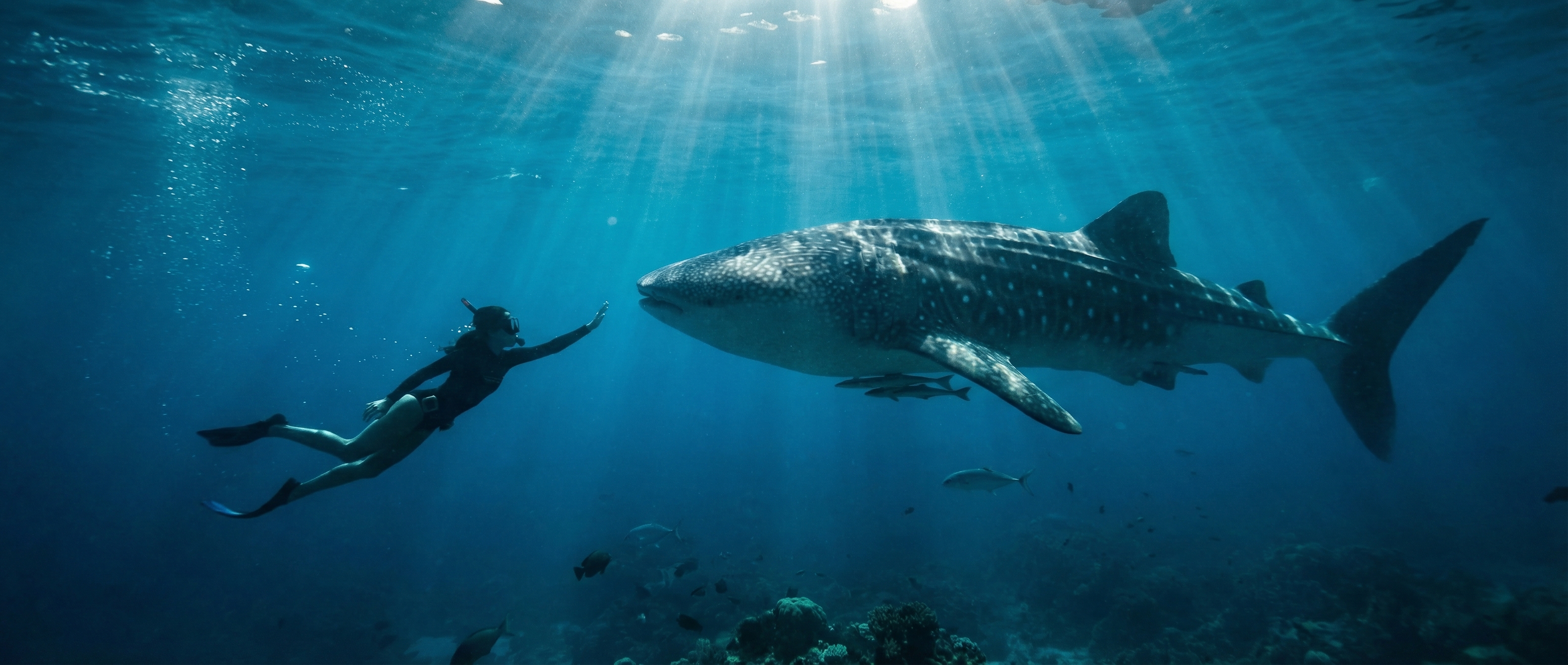
- Swim with whale sharks in Oslob. The signature Cebu bucket-list item. Oslob whale shark watching puts you in the water with the biggest fish in the sea. It's also the most ethically debated activity in Cebu, so read our honest take in the Oslob whale sharks guide before you go.
- Canyoneering to Kawasan Falls. A 3–4 hour adventure of jumping, swimming, and sliding through a river canyon that ends at the turquoise tiers of Kawasan Falls in Badian — for many travelers the single best day in Cebu.
- The Moalboal sardine run. Wade off the beach and you're inside a swirling ball of millions of sardines. The Moalboal sardine run needs no boat and no diving certification — just a mask and fins.
- Pescador Island. A short boat ride from Moalboal, Pescador Island is a tiny protected reef famous for its "Cathedral" cave and some of the best snorkeling and diving in the Philippines.
- Cebu City heritage. Magellan's Cross, the Basilica del Santo Niño, Fort San Pedro, and the hilltop Temple of Leah and Tops Lookout fill an easy day before or after you head south.
For the full menu, see our roundup of things to do in Cebu.
A Sample Cebu Trip for Canadians
Because the flight is long, most Canadians come for at least 10–14 days — often with a family-visit block built in. A clean structure:
- Days 1–2: Cebu City + recover from the flight. Ease in, see the heritage core, eat lechon. If you've got family here, this is your base.
- Days 3–7: The southern loop. Head south to Oslob (whale sharks), Badian (Kawasan canyoneering), and Moalboal (sardine run + Pescador Island). This is the heart of the trip.
- Days 8+: Family time, a beach island, or slow down. Add Bantayan or Malapascua in the north, or simply spend the remaining days with relatives.
If you want a ready-made plan to drop into the middle of your trip, our 5-day Cebu itinerary covers the southern highlights day by day with transport and budget notes.
Where to Stay in Cebu
For a first trip, Cebu City (or nearby Mactan, by the airport and resorts) makes the most sense as a base — it's central to the airport, the heritage sites, and the road south. When you do the southern loop, plan a night or two in Moalboal, the backpacker-and-diver hub that's also the launchpad for the sardine run and Kawasan.
Search Cebu hotels on Agoda to compare options — budget guesthouses from around C$20/night, comfortable mid-range hotels in the C$50–90 range, and Mactan beach resorts above that. For a deeper breakdown of neighbourhoods, see where to stay in Cebu City.
If you're a Fil-Canadian staying with family, you may only need a hotel for the touring portion of your trip — book a couple of nights in Moalboal for the southern loop and stay with relatives the rest.
Budgeting Your Cebu Trip in CAD
Cebu is inexpensive for Canadians once you're on the ground — the long flight is the big-ticket item, not the holiday itself. At roughly ₱42 = C$1 (June 2026), here's what a comfortable mid-range day looks like:
| Item | Cost (CAD) | Cost (₱) |
|---|---|---|
| Mid-range hotel (per night) | C$50–90 | ₱2,100–3,800 |
| Meals (3/day, local + casual) | C$15–25 | ₱630–1,050 |
| Whale shark interaction (Oslob) | ~C$24 | ₱1,000 |
| Kawasan canyoneering | ~C$36–43 | ₱1,500–1,800 |
| Grab / tricycle around town (per day) | C$5–10 | ₱210–420 |
| Ceres bus, Cebu City to the south (one way) | ~C$5 | ₱200 |
Verified June 2026. Rate: ₱42 ≈ C$1. Activity fees are per person.
A realistic on-the-ground budget is about C$70–120 per person per day for a mid-range trip — less if you're staying with family or doing dorms and buses, more if you want beach resorts and private transfers. The biggest variable by far is your flight, which is why it's worth setting a Skyscanner price alert months out.
The Honest Take: It's a Long Way to Come
Let's be straight about the one real downside for Canadians: Cebu is far, and there's no direct flight to soften it. Seventeen to twenty hours from Vancouver, more from the east, always with at least one connection and often jet lag on both ends. This is not a long-weekend destination.
What that means in practice: don't come for under a week. The flight only makes sense if you're staying 10 days or more, which is part of why the trip pairs so naturally with a family visit. Give yourself a buffer day on arrival to recover before you're up at 4 AM for whale sharks. And because you're coming so far, it's worth doing Cebu properly — the southern loop plus a beach island in the north, rather than rushing.
The payoff is real, though. For the price of one long-haul flight, you get whale sharks, world-class diving, waterfalls, and genuine warmth from one of the friendliest, most English-fluent corners of Asia — in the exact months Canada is frozen. Plan the trip length around the distance and Cebu rewards the effort.
Plan Your Cebu Trip
Cebu is one of the best winter escapes a Canadian can make — just plan for the distance, book the southern highlights early, and lean into the family-visit angle if you have one. Start with the 5-day Cebu itinerary and the best time to visit Cebu, then read up on Oslob whale shark watching, Kawasan Falls, and the Moalboal sardine run before you go.
Ready to lock things in? Browse Cebu tours and activities on Klook and find your hotels on Agoda — and set a flight price alert on Skyscanner for your travel window.
Book Tours & Hotels for This Trip
Find and book the best deals — prices and availability update in real time. Links open in a new tab.
Frequently Asked Questions
Do Canadians need a visa to visit Cebu (the Philippines)?
No. Canadian passport holders get 30 days visa-free entry to the Philippines under Executive Order 408 — no visa to arrange in advance. You'll also need to complete the free online eTravel registration at etravel.gov.ph within 72 hours of arrival, and carry proof of onward or return travel. Verified June 2026 — confirm with the Philippine embassy or your airline before you fly.
Are there direct flights from Canada to Cebu?
No. There are no direct flights from Canada to Cebu. Canadians connect through an Asian hub — Tokyo, Seoul, Hong Kong, or Taipei — straight into Cebu (Mactan-Cebu International Airport, code CEB), or fly to Manila and take a 1.5-hour domestic hop to Cebu. From Vancouver, total travel time runs about 17–20 hours; expect longer from eastern Canada. Check Skyscanner or Google Flights for routings and fares. Verified June 2026.
How long does it take to fly from Canada to Cebu?
From Vancouver, roughly 17–20 hours total including one connection. From Toronto, Montreal, or Ottawa, add several hours — eastern Canada routings are longer and usually involve a longer first leg across the Pacific or via the Middle East. There's no way to avoid at least one stop. Verified June 2026.
When is the best time for Canadians to visit Cebu?
December to May, which is the Philippine dry season — and conveniently the depth of the Canadian winter. Flying out of a Canadian January into Cebu's 28–32°C dry-season weather is the ideal escape, with the most reliable conditions for whale sharks, canyoneering, and island hopping. Avoid the August–November typhoon-and-rain window if you can.
What currency is used in Cebu, and should I bring Canadian dollars?
Cebu uses the Philippine peso (₱). As of June 2026, roughly ₱42 = C$1. You can exchange Canadian dollars at airport and city money changers, but USD often gets a better rate, and ATMs that take Visa/Mastercard are everywhere in Cebu City. Carry some cash for buses, tricycles, and rural areas where cards aren't accepted.
Do I need a power adapter for Cebu as a Canadian?
Cebu uses the same flat two-pin Type A/B plugs as Canada, so your plugs will physically fit — but the Philippines runs on 230V versus Canada's 120V. Most phone, laptop, and camera chargers are dual-voltage (check the label for '100–240V') and are fine. Single-voltage Canadian appliances like some hair dryers can be damaged, so bring a voltage converter for those or buy a cheap local one.
Is Cebu a good trip for Fil-Canadians visiting family?
Very much so. A large share of Canadian visitors to Cebu are Fil-Canadians combining a balikbayan family visit with travel. You can base yourself with family in or near Cebu City and do whale sharks, Kawasan, and Moalboal as day trips or a short southern loop. See our balikbayan-focused guide for the family-visit angle, pasalubong, and getting around.
Is Cebu safe for Canadian tourists?
Cebu is one of the more relaxed, tourist-friendly parts of the Philippines, and the usual common-sense precautions apply — watch your belongings in crowded markets, use Grab (ride-hailing) at night, and agree tricycle fares before you ride. English is widely spoken, so communication is rarely an issue. Check your Canadian government travel advisory before departure.
More Places to Explore
 Wildlife
Whale Shark Watching
Oslob
Swim alongside gentle whale sharks, the world's largest fish, in one of the few places where these magnificent creatures can be reliably encountered.
WaterfallsKawasan Falls
Badian
A stunning three-tiered waterfall famous for its turquoise waters, bamboo raft rides, and as the endpoint of the famous Badian canyoneering adventure.
Diving & SnorkelingMoalboal Sardine Run
Moalboal
Swim with millions of sardines in one of the world's only year-round sardine runs, just meters from shore.
IslandsPescador Island
Moalboal
A world-class marine sanctuary featuring The Cathedral underwater cave and exceptional wall diving.